


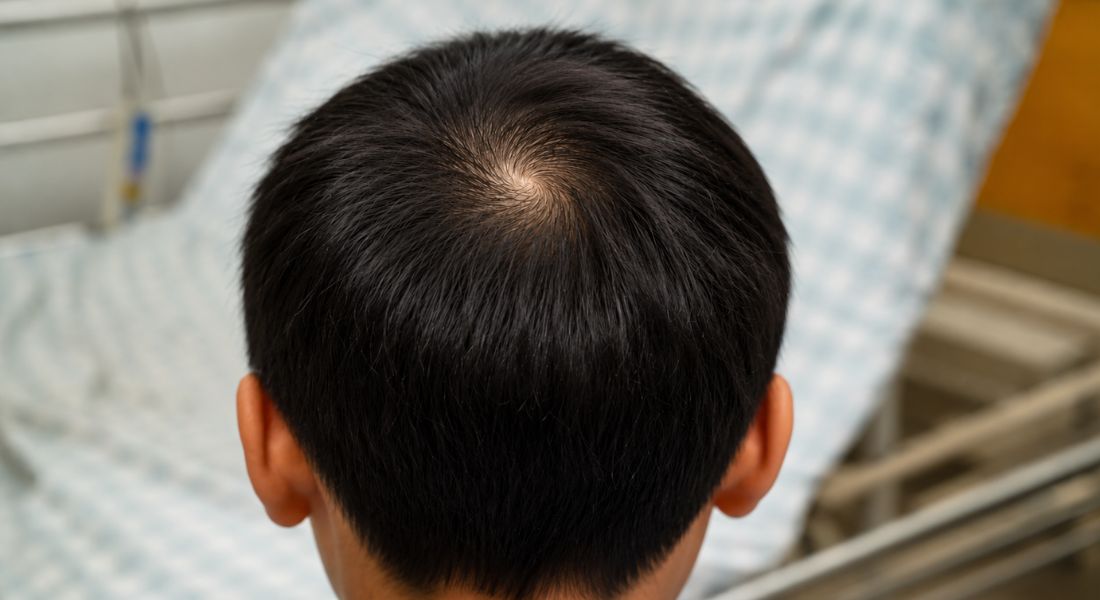
Noticing a bald patch on your child’s scalp can be worrying, particularly if the hair loss appears suddenly. You may wonder whether it is linked to stress, an infection, poor nutrition, hair pulling, or another underlying medical condition. One possible cause is paediatric alopecia areata, an autoimmune condition that can affect children and teenagers.
Alopecia areata develops when the immune system mistakenly targets healthy hair follicles. This usually causes smooth, round or oval patches of hair loss, most often on the scalp, although the eyebrows, eyelashes, and other areas of the body can also be affected. The skin within the affected area typically looks normal, without scarring or obvious scaling.
The condition can vary from one child to another. Some children develop a single patch that regrows naturally, while others may experience repeated episodes or more widespread hair loss. Dermatology guidance recognises alopecia areata as a chronic inflammatory condition with an unpredictable course. Some children experience spontaneous regrowth, while others may develop recurrent episodes or more extensive hair loss.
If your child is losing hair, arranging a specialist assessment can help identify the cause and guide the most appropriate next steps. An early diagnosis is important because several childhood scalp conditions can appear similar but require different treatments.
What Is Paediatric Alopecia Areata?
Paediatric alopecia areata is a form of alopecia areata that develops during childhood or adolescence. It is a non-scarring type of hair loss, which means the hair follicles usually remain intact beneath the skin. This is important because hair may regrow once the inflammation settles.
The condition most commonly causes smooth, round patches of hair loss on the scalp that can appear quite suddenly. You may first notice these patches while washing, brushing, or styling your child’s hair. Some children develop just one patch, while others may have several areas of hair loss.
It is important to know that alopecia areata is not contagious. Your child cannot catch it from someone else or pass it on to classmates, siblings, or other family members. Understanding this can provide reassurance and help your child feel more confident if they are worried about their hair loss.
Understanding Alopecia Areata at a Glance
| Feature | Explanation |
| Condition type | Autoimmune, non-scarring hair loss |
| Common age group | Children and teenagers |
| Typical appearance | Smooth round or oval patches of hair loss |
| Contagious | No |
| Hair regrowth | Possible, although recurrence can occur |
| Specialist involved | Dermatologist, often paediatric dermatologist |
Why Does Alopecia Areata Happen?
Alopecia areata is an autoimmune condition, which means your child’s immune system mistakenly attacks healthy hair follicles. This inflammation interrupts the normal hair growth cycle and causes patches of hair to fall out, even though the hair follicles usually remain present beneath the skin.
Researchers believe the condition develops when the hair follicle loses its normal immune protection. Current guidance from the British Association of Dermatologists describes alopecia areata as a chronic inflammatory condition involving immune cells around the base of the hair follicle.
The exact reason why this happens is not always known. Genetics, immune system activity, atopic conditions such as eczema, a tendency towards autoimmune conditions, and environmental factors may all contribute. However, in many children, no single trigger can be identified, and the condition develops without an obvious cause.
Evidence Note
Research shows that alopecia areata is an autoimmune condition where immune cells mistakenly target hair follicles, interrupting normal hair growth. Research has identified immune pathways, including the JAK-STAT pathway, as important in the development of alopecia areata. This improved understanding has contributed to research into newer targeted treatments, although these therapies are only suitable for selected patients.
Is It Caused by Stress?
Many parents wonder whether stress is the reason their child has developed alopecia areata. While stress may be linked to flare-ups in some children, it is not considered the underlying cause of the condition. Alopecia areata is an immune-mediated disorder, not something that happens because your child has been worried or upset.
Children can develop alopecia areata even when they are otherwise healthy, happy, and well supported. You should not blame yourself or assume that family life, school, or everyday routines have caused your child’s hair loss. The immune changes involved are complex, and in many cases there is no clear trigger.
Although stress does not usually cause alopecia areata, living with hair loss can affect your child’s emotional wellbeing. Some children may feel self-conscious, anxious, or embarrassed when the patches become noticeable. Offering reassurance, listening to your child’s concerns, and seeking appropriate support can make a positive difference.
Myth vs Fact
| Myth | Fact |
| Stress is the main cause of alopecia areata in children | Alopecia areata is an autoimmune condition involving immune activity against hair follicles. Stress may influence flare-ups in some children but is not considered the underlying cause. |
| Hair loss means my child is unhealthy | Many children with alopecia areata are otherwise healthy. The condition affects hair follicles but does not usually indicate poor general health. |
| Alopecia areata is contagious | Alopecia areata cannot spread between children because it is not an infection. |
| Losing hair means it will never grow back | Many children experience regrowth, although the condition can sometimes return. |
| Strong treatments are always needed immediately | Some children with limited hair loss may only need monitoring, while others may benefit from treatment. |
Common Signs Parents Notice
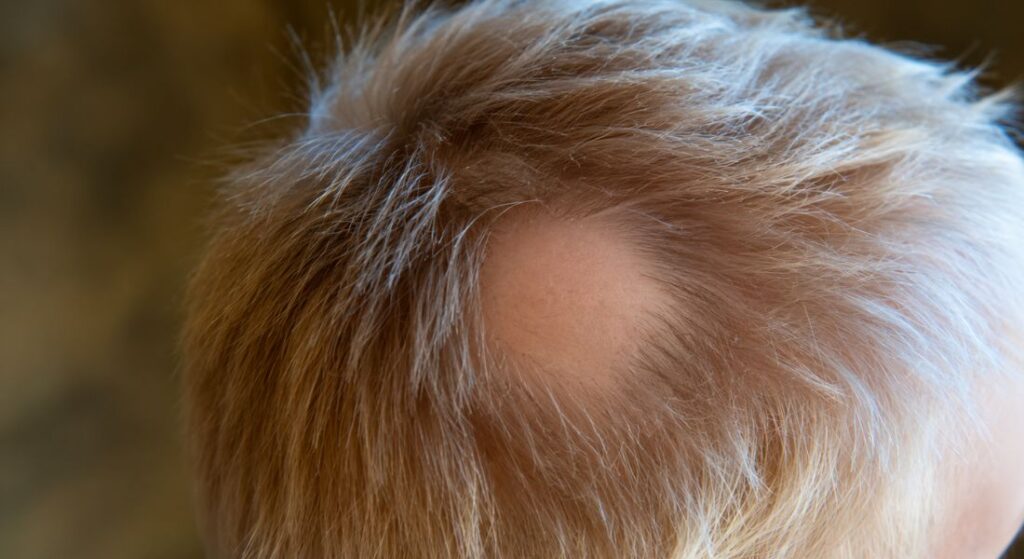
The most common sign of alopecia areata is one or more smooth, round, or oval bald patches on your child’s scalp. The affected skin usually looks healthy, without redness, scaling, crusting, or scarring. A small patch may appear suddenly and gradually become larger over several days or weeks.
Some children develop short broken hairs around the edge of the bald patch. These may appear narrower near the scalp and are sometimes described as “exclamation mark hairs” because they are narrower near the scalp, and a dermatologist may look for them during your child’s examination as they can support the diagnosis.
You may also notice more hair than usual on your child’s pillow, hairbrush, clothing, or in the bath. Although sudden hair shedding can be upsetting, the pattern of hair loss and the appearance of the scalp provide important clues that help distinguish alopecia areata from other causes of childhood hair loss.
Areas That Can Be Affected
The scalp is the area most commonly affected by alopecia areata in children. Hair loss can develop anywhere on the scalp, including the crown, sides, back, or along the hairline. Depending on your child’s hairstyle, some patches may be easier to cover than others.
Alopecia areata can also affect the eyebrows and eyelashes. Because these areas are more visible, the hair loss may have a greater emotional impact on your child. In some cases, loss of eyelashes may make the eyes feel more sensitive because eyelashes help reduce exposure to dust and particles.
Less commonly, alopecia areata can affect larger areas of the body. Complete loss of scalp hair is known as alopecia totalis, while loss of hair from the scalp, face, and body is called alopecia universalis. Although these forms are less common, your dermatologist will explain what they mean and discuss the most appropriate management if they occur.
Different Patterns of Alopecia Areata
Patchy alopecia areata is the most common form seen in children. It causes one or more well-defined patches of hair loss that may remain small or change in size over time. Some children develop only a single patch, while others may experience new areas of hair loss.
Another pattern is called ophiasis, where hair loss affects the sides and back of the scalp, often following the hairline. This pattern may be associated with a higher chance of persistent hair loss compared with limited patchy alopecia areata. Because it affects the hairline, it can also be mistaken for other causes of hair loss.
Some children develop diffuse alopecia areata, which causes more general thinning rather than clearly defined bald patches. This pattern can be more difficult to recognise because it may resemble other conditions, such as telogen effluvium. A dermatologist can examine your child’s scalp and determine which pattern is present so that the most appropriate treatment can be recommended.
How Alopecia Areata Differs from Ringworm
If your child has patchy hair loss, one possible cause is scalp ringworm, also known as tinea capitis. Unlike alopecia areata, which is an autoimmune condition, ringworm is caused by a fungal infection that can spread between children and usually requires antifungal medication.
You may notice that ringworm causes symptoms such as scaling, redness, broken hairs, itching, tenderness, or swollen lymph nodes around your child’s neck. The scalp may appear inflamed rather than smooth, although appearances can vary and professional assessment is often needed.
Getting the correct diagnosis is important because the treatments for these conditions are completely different. If ringworm is mistaken for alopecia areata, the fungal infection may continue without the treatment it needs. Likewise, treating alopecia areata as an infection is unlikely to improve your child’s hair loss, so a proper assessment by a healthcare professional is essential.
Alopecia Areata vs Scalp Ringworm
| Feature | Alopecia Areata | Scalp Ringworm (Tinea Capitis) |
| Cause | Autoimmune reaction affecting hair follicles | Fungal infection |
| Contagious | No | Yes |
| Appearance | Smooth bald patches with normal-looking skin | Scaling, redness, broken hairs or inflammation |
| Itching | Usually absent | May occur |
| Treatment | Depends on severity and age | Requires antifungal treatment |
| Diagnosis | Clinical examination, sometimes dermoscopy | Examination and sometimes fungal testing |
Other Conditions That Can Cause Hair Loss
Alopecia areata is only one of several conditions that can cause hair loss in children. Other possible causes include hair pulling, tight hairstyles, traction alopecia, nutritional deficiencies, thyroid disorders, telogen effluvium, scalp inflammation, and certain inherited hair conditions. The correct diagnosis depends on your child’s symptoms, medical history, and the pattern of hair loss.
Traction alopecia can develop when hairstyles place repeated tension on the hair, particularly around the hairline. Trichotillomania, a condition involving repeated hair pulling, often causes irregular patches with hairs of different lengths. Telogen effluvium usually leads to increased hair shedding following an illness, significant stress, medication, or another major physical change.
During your child’s assessment, a dermatologist will consider these and other possible causes before confirming a diagnosis. A careful examination helps ensure your child receives the most appropriate advice and treatment, rather than making assumptions based on the appearance of the hair loss alone.
How a Dermatologist Diagnoses It
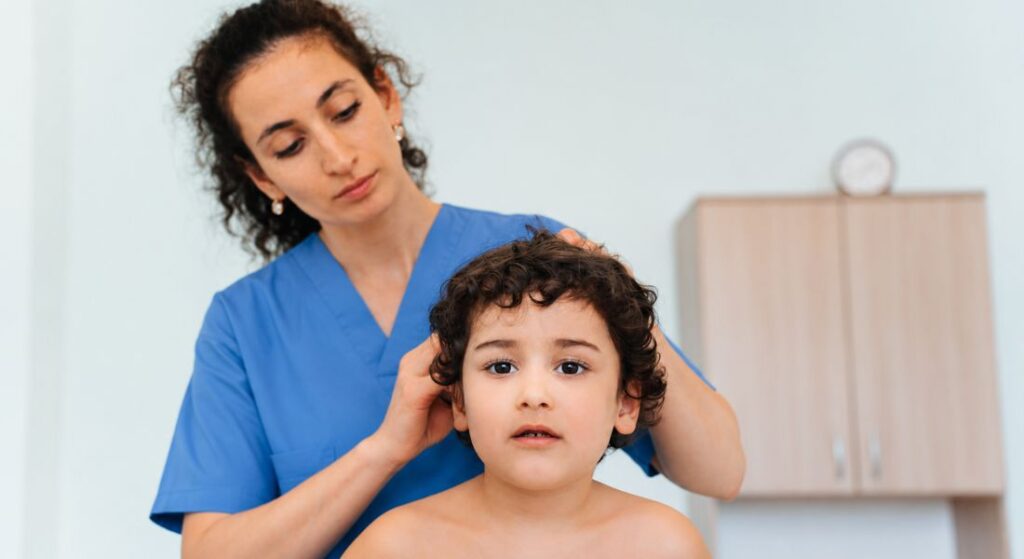
Diagnosing alopecia areata usually begins with a detailed discussion about your child’s symptoms and a careful examination of the scalp. Your dermatologist may ask when the hair loss first appeared, whether it has spread, and whether your child has any itching, pain, or other symptoms. They may also ask about eczema, asthma, thyroid disease, vitiligo, other autoimmune conditions, and your family’s medical history.
Your child’s scalp may be examined using a dermatoscope (a magnifying device used to examine the skin and hair), which is a handheld device that provides a magnified view of the hair and scalp. This allows the dermatologist to look for features such as broken hairs, black dots, yellow dots, and changes around the hair follicles that can help support the diagnosis.
In most children, alopecia areata can be diagnosed without the need for a skin biopsy. If there is any uncertainty, your dermatologist may recommend additional tests to rule out conditions such as a fungal infection, nutritional deficiencies, or other medical causes of hair loss before confirming the diagnosis.
Clinical Tip
Take photographs of any new patches of hair loss before your appointment. This can help your dermatologist understand how quickly the condition has changed and whether the affected areas are spreading or improving.
Are Blood Tests Needed?
Blood tests are not necessary for every child with alopecia areata. If your child is otherwise healthy and has a typical small patch of hair loss, your dermatologist may be able to make the diagnosis without further investigations. Avoiding unnecessary investigations can reduce anxiety and ensure that tests are focused on situations where they are likely to provide useful information.
Your dermatologist may recommend blood tests if your child has symptoms that suggest another underlying condition. For example, tiredness, changes in weight, constipation, poor growth, heat intolerance, or signs of another autoimmune condition may indicate that further assessment is appropriate. Your family medical history may also be taken into account when deciding whether testing is needed.
The decision to arrange blood tests is based on your child’s individual symptoms and clinical findings rather than a routine checklist. A personalised approach helps ensure that any investigations are relevant and provides the most appropriate care for your child.
Will My Child’s Hair Grow Back?
Many children with limited patchy alopecia areata experience hair regrowth, although the timing can vary from one child to another. Hair may begin to return within a few months, but in some cases it can take longer. The new hair often starts as fine, pale, or white before gradually becoming thicker and returning to its usual colour.
It is important to remember that alopecia areata can be unpredictable. Your child’s hair may regrow completely and then fall out again later, or new patches may develop in different areas of the scalp. This pattern can be upsetting, but it does not necessarily mean the condition is becoming more severe.
The likelihood of regrowth depends on several factors, including the extent and pattern of hair loss, your child’s age when the condition began, how long it has been present, and whether the eyebrows, eyelashes, or nails are also affected. Your dermatologist can discuss your child’s individual outlook and explain what you may expect over time.
When Observation May Be Appropriate
In some children with small, recent patches of alopecia areata, careful observation may be an appropriate option. This means monitoring the hair loss without starting treatment straight away, particularly if the affected area is limited and your child is not experiencing significant distress.
Observation does not mean that the condition is being ignored. Your child’s scalp should still be reviewed regularly, and you should know what changes to watch for, such as new patches, enlargement of existing areas, or signs of hair regrowth. Follow-up appointments may be arranged to assess how the condition is progressing.
This approach may be particularly suitable for younger children who may find treatments difficult to tolerate. However, if the hair loss spreads quickly, becomes more extensive, or begins to affect your child’s confidence and wellbeing, your dermatologist may discuss starting active treatment sooner.
Topical Corticosteroid Treatment
Topical corticosteroids are commonly considered as a treatment option for children with limited patchy alopecia areata. These medicines are applied directly to affected areas and may help reduce inflammation around the hair follicles, which can support hair regrowth in some children.
The strength of the treatment and how long it is used will depend on your child’s age, the size and location of the affected area, and the severity of the condition. Your dermatologist will explain how to apply the medication safely, how often it should be used, and when it should be reviewed or stopped. Strong steroid treatments should only be used under medical supervision.
Like all medicines, topical corticosteroids can cause side effects if they are not used correctly. These may include skin thinning, irritation, small spots, or changes in skin texture, particularly with prolonged use. Following your dermatologist’s instructions carefully helps reduce these risks and ensures your child receives the most appropriate treatment.
Steroid Injections in Older Children
Steroid injections may be an option for some older children or teenagers with a small number of persistent patches of alopecia areata. The treatment involves injecting small amounts of corticosteroid into the affected areas of the scalp to reduce inflammation around the hair follicles and encourage hair regrowth.
This treatment is not suitable for every child. The injections can be uncomfortable, so they are generally not recommended for younger children or for those who are particularly anxious about needles. Your dermatologist will discuss whether this option is appropriate based on your child’s age, the extent of hair loss, and their individual circumstances.
If steroid injections are recommended, they are usually carried out by an experienced clinician in a specialist setting. Your child’s response to treatment will be monitored at follow-up appointments, and the treated areas will be checked for any side effects to ensure the treatment remains safe and effective.
Other Topical Treatments
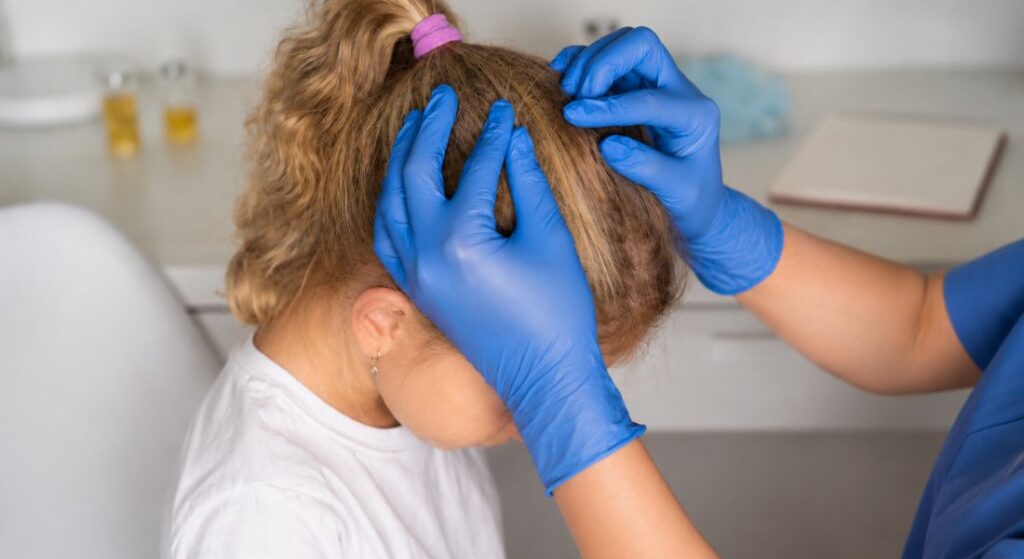
Other topical treatments may be considered depending on your child’s age, the extent of hair loss, and your dermatologist’s assessment. In selected cases, minoxidil may be recommended as a supportive treatment. Although it does not treat the underlying autoimmune cause of alopecia areata, it may help encourage hair growth in some children.
For more extensive or persistent alopecia areata, topical immunotherapy may be offered in specialist centres. This treatment works by creating a controlled allergic reaction on the scalp to help modify the immune response around the hair follicles. It requires careful supervision and regular follow-up appointments with an experienced dermatologist.
Not every treatment is suitable for every child, and there is no single approach that works for everyone. Your dermatologist will consider factors such as your child’s age, treatment tolerance, the pattern and extent of hair loss, school routine, and the emotional impact before recommending the most appropriate option.
Newer Treatments and JAK Inhibitors
Recent advances in research have led to the development of medicines known as JAK inhibitors for alopecia areata. These treatments work by targeting immune signalling pathways involved in the condition and have expanded treatment options for selected patients with severe alopecia areata, particularly adolescents and adults.
In the UK, ritlecitinib is licensed for certain patients aged 12 years and over with severe alopecia areata. NICE guidance should be checked for the latest recommendations regarding eligibility and NHS use. NICE has also recommended it as a treatment option for eligible patients within its marketing authorisation, following assessment by an appropriate specialist.
JAK inhibitors are not suitable for every child and are generally reserved for more severe cases managed by specialist dermatology teams. Before treatment begins, your specialist will discuss the potential benefits and possible risks, including infections and other safety considerations, and will arrange appropriate monitoring throughout treatment.
Research Insight:
Recent research has improved understanding of the immune pathways involved in alopecia areata. JAK inhibitors represent an important development because they target specific immune signals involved in inflammation. However, these medicines are specialist treatments and are not suitable for every child. Decisions about advanced treatments should always consider age, severity, potential risks, and UK prescribing guidance.
Latest Research into Childhood Alopecia Areata
Research into childhood alopecia areata continues to improve understanding of why the immune system attacks healthy hair follicles. Scientists are investigating immune pathways, genetic factors, inflammatory signals, and biomarkers that may help predict which children are more likely to develop persistent or severe disease. These discoveries are supporting the development of more targeted treatments.
Clinical trials have also expanded treatment options for adolescents with severe alopecia areata. The availability of licensed systemic medicines for people aged 12 years and over represents an important step forward compared with previous years, when treatment choices for more severe cases were much more limited.
Research in younger children is still developing, and many newer treatments have been studied more extensively in adults and adolescents than in younger age groups. For this reason, careful assessment by a paediatric dermatologist remains essential before considering advanced therapies, ensuring that any treatment is appropriate, safe, and based on the latest available evidence.
UK Guidance Note:
In the UK, treatment decisions for children and teenagers with alopecia areata are based on specialist dermatology assessment, the severity of hair loss, the child’s age, and the impact on their wellbeing. Some newer medicines have specific eligibility criteria set out in NICE guidance and are not suitable for every child.
Nail Changes and Associated Conditions
Some children with alopecia areata also develop changes to their nails. These may include tiny pits, ridges, roughness, brittleness, or changes in the surface of the nail. Nail involvement does not occur in every child, but it can sometimes be associated with more persistent or extensive alopecia areata.
Alopecia areata is also seen more often in children with atopic conditions such as eczema, asthma, or hay fever. It may occur alongside other autoimmune conditions, including thyroid disease and vitiligo, although most children with alopecia areata do not develop additional autoimmune diseases.
The presence of alopecia areata does not mean your child will definitely have another medical condition. Your dermatologist may ask about your child’s symptoms, medical history, and family history to decide whether any further assessment is needed. Any additional investigations will be guided by your child’s individual signs and symptoms rather than carried out routinely.
Supporting Your Child Emotionally
Hair loss can have a significant emotional impact on some children, particularly if the patches are visible or classmates begin asking questions. While some children adapt quickly, others may feel embarrassed, anxious, upset, or frustrated. How your child responds often depends on their age, personality, school environment, and the extent of the hair loss.
It can help to explain the condition in simple, reassuring language. You might tell your child that their immune system is mistakenly affecting the hair follicles, that alopecia areata is not contagious, and that a dermatologist can help assess and manage the condition. At the same time, it is important to avoid promising that all the hair will definitely grow back, as the condition can be unpredictable.
Support from school, family, and healthcare professionals can make a positive difference to your child’s confidence and wellbeing. If needed, your dermatologist may also suggest support organisations, educational resources, or counselling support where appropriate.
Key Takeaways
- Alopecia areata is an autoimmune condition that causes non-scarring hair loss in children.
- It is not contagious and is not caused by poor hygiene or parenting.
- Many children experience hair regrowth, although the condition can sometimes return.
- A dermatologist can distinguish alopecia areata from other causes of childhood hair loss.
- Treatment depends on your child’s age, pattern of hair loss, severity, and emotional impact.
- Newer treatments such as JAK inhibitors are specialist options for selected patients.
- Emotional support is an important part of managing childhood hair loss.
Frequently Asked Questions
1. Is alopecia areata common in children?
Yes, alopecia areata is one of the more common causes of patchy hair loss in children. It can develop at any age during childhood or adolescence and often appears suddenly. Although it can be worrying, many children experience periods of hair regrowth.
2. Can my child’s hair grow back without treatment?
Yes, many children with small patches of alopecia areata experience natural hair regrowth over time. However, the condition is unpredictable, and some children may develop new patches or have repeated episodes. Your dermatologist can advise whether observation or treatment is the most appropriate approach.
3. Is alopecia areata contagious?
No, alopecia areata is not contagious. Your child cannot catch it from another person or pass it on to classmates, siblings, or friends. It is an autoimmune condition rather than an infection.
4. Can stress cause alopecia areata in children?
Stress is not considered the underlying cause of alopecia areata. While emotional or physical stress may be associated with flare-ups in some children, the condition develops because the immune system mistakenly attacks healthy hair follicles.
5. What is the difference between alopecia areata and scalp ringworm?
Alopecia areata usually causes smooth bald patches with normal-looking skin, whereas scalp ringworm often causes scaling, redness, broken hairs, and sometimes itching. Ringworm is a fungal infection that requires antifungal treatment, so an accurate diagnosis is important.
6. Will my child need blood tests?
Not always. If your child’s hair loss has the typical features of alopecia areata and they are otherwise well, blood tests may not be necessary. Additional tests are usually considered only if symptoms suggest another underlying medical condition.
7. Can alopecia areata affect eyebrows and eyelashes?
Yes, although the scalp is most commonly affected, alopecia areata can also involve the eyebrows and eyelashes. In more extensive cases, hair loss may affect larger areas of the body. Your dermatologist will assess the pattern of hair loss and discuss appropriate management.
8. What treatments are available for children with alopecia areata?
Several treatments may help encourage hair regrowth, including topical corticosteroids and, in selected cases, other specialist therapies. The most suitable treatment depends on your child’s age, the extent of hair loss, and how the condition is affecting them. Some children may only require careful monitoring.
9. Can alopecia areata keep coming back?
Yes, alopecia areata can be a recurring condition. Hair may regrow completely and then new patches may develop months or even years later. Regular follow-up can help monitor changes and adjust treatment if needed.
10. When should my child see a dermatologist for hair loss?
You should arrange a specialist assessment if your child develops sudden patchy hair loss, rapidly worsening hair loss, eyebrow or eyelash loss, or symptoms such as redness, scaling, pain, or itching. It is also advisable to seek advice if the hair loss is affecting your child’s confidence or everyday life.
Final Thoughts: Expert Care for Children with Alopecia Areata
Discovering that your child is losing their hair can be worrying, but an early assessment can help identify the cause and ensure they receive the most appropriate care. With the right diagnosis, ongoing support, and personalised treatment where needed, many children with alopecia areata are able to manage the condition successfully while maintaining their confidence and wellbeing.
If you are concerned about your child’s hair loss, arranging an appointment with an experienced paediatric dermatologist in London at London Dermatology Centre can provide expert assessment, a clear diagnosis, and an individualised treatment plan tailored to your child’s needs.
References:
- Harries, M.J. et al. (2026) ‘British Association of Dermatologists living guideline for managing people with alopecia areata 2025’, British Journal of Dermatology, 194(2), pp. e56–e73. Available at: https://pubmed.ncbi.nlm.nih.gov/41234147/
- Barton, V.R., Toussi, A., Awasthi, S. and Kiuru, M. (2022) ‘Treatment of pediatric alopecia areata: A systematic review’, Journal of the American Academy of Dermatology, 86(6), pp. 1318–1334. Available at: https://pmc.ncbi.nlm.nih.gov/articles/PMC8556406/
- Kalil, L., Welch, D., Heath, C.R. and Craiglow, B.G. (2025) ‘Systemic therapies for pediatric alopecia areata’, Pediatric Dermatology, 42(S1), pp. 36–42. Available at: https://pubmed.ncbi.nlm.nih.gov/40044621/
- Tan, I.J. and Jafferany, M. (2024) ‘Psychosocial impact of alopecia areata in paediatric and adolescent populations: A systematic review’, Journal of Paediatrics and Child Health, 60(12), pp. 778–782. Available at: https://pmc.ncbi.nlm.nih.gov/articles/PMC11616254/
- Hordinsky, M. et al. (2023) ‘Efficacy and safety of ritlecitinib in adolescents with alopecia areata: Results from the ALLEGRO phase 2b/3 randomized, double-blind, placebo-controlled trial’, Pediatric Dermatology, 40(6), pp. 1003–1009. Available at: https://pubmed.ncbi.nlm.nih.gov/37455588/