


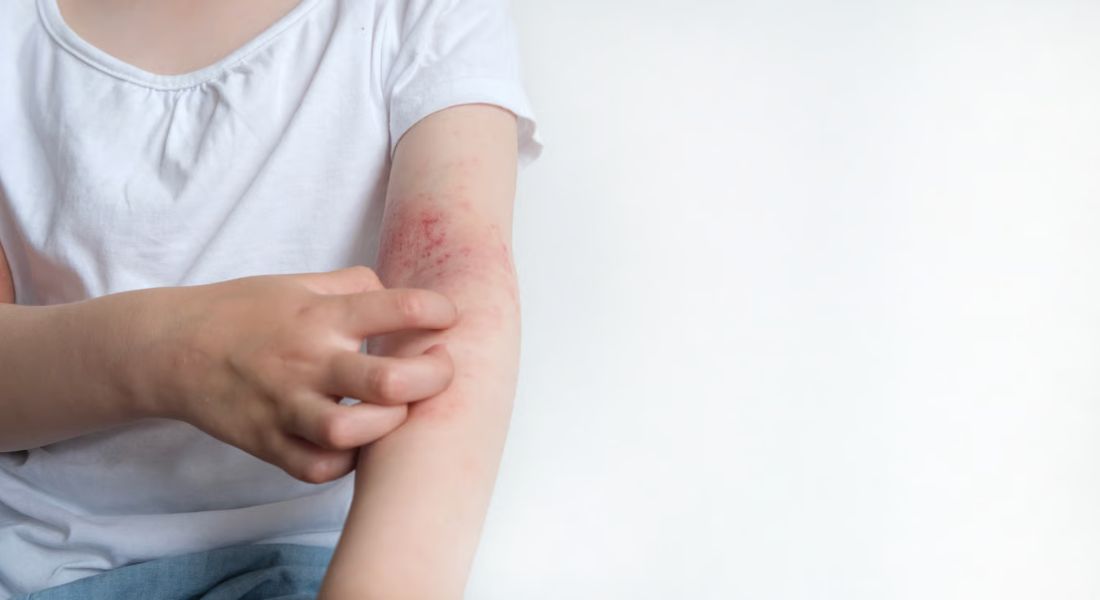
Noticing a persistent scaly, itchy or inflamed rash on your child’s skin can be worrying. If it keeps coming back despite using moisturisers or treatments for common childhood skin conditions, it may be a sign of juvenile psoriasis. Several other skin conditions can look similar, so it is important to have the rash assessed properly.
Psoriasis is a chronic immune-mediated inflammatory condition that causes skin cells to build up more quickly than normal. This creates well-defined patches of inflamed, scaly skin and may also cause changes affecting your child’s scalp or nails. In a smaller proportion of children, psoriasis-related inflammation can also affect the joints.
Juvenile psoriasis is not contagious, so your child cannot pass it to other children through everyday contact or shared activities. It is also not caused by poor hygiene, diet or anything you have done as a parent. Although there is no cure, the right diagnosis, treatment plan and ongoing support can help keep your child’s symptoms well controlled and improve their quality of life.
What Juvenile Psoriasis Means
Juvenile psoriasis is psoriasis that develops during childhood or adolescence. It can appear at any age, including infancy, although the symptoms and the areas affected may change as your child grows. Every child experiences the condition differently.
The condition develops when the immune system becomes overactive and speeds up the production of skin cells. Instead of shedding naturally, these cells build up on the surface of the skin. This leads to the red, scaly patches that are commonly seen in psoriasis.
Although psoriasis is a long-term condition, it does not mean your child will always have visible symptoms. Many children experience flare-ups followed by periods when their skin improves or becomes almost clear. With the right treatment and ongoing care, symptoms can often be managed effectively.
Why Psoriasis Develops in Children
There is no single cause of juvenile psoriasis. Your child may inherit a genetic tendency to develop the condition, but having a family history does not necessarily mean they will develop psoriasis. Some children are the first in their family to be diagnosed.
Genetics is only one part of the picture. In children who are more likely to develop psoriasis, factors such as infections, skin injuries, stress, hormonal changes or certain medicines may trigger the condition or lead to a flare-up. These triggers vary from one child to another.
It is important to remember that psoriasis is not caused by poor hygiene or anything your child has eaten. It is also not the result of anything you have or have not done as a parent. Understanding the condition can help you focus on managing symptoms rather than looking for someone to blame.
The Main Symptoms to Look For
Juvenile psoriasis often appears as raised, inflamed patches of skin with a dry, scaly surface. These patches may feel itchy, sore or tight, although some children have visible plaques with very little discomfort. The symptoms can vary depending on your child’s age and the type of psoriasis they have.
The patches usually have well-defined edges, making it easy to see where the affected skin begins and ends. The scales may appear silvery-white, greyish or slightly yellow, depending on your child’s skin tone and the area involved. Psoriasis can affect a single area or appear on several parts of the body at the same time.
If your child scratches itchy areas, the skin may crack, bleed or become infected. Younger children may not be able to explain how their skin feels and may instead seem irritable, rub the affected areas or have trouble sleeping. Even a small patch of psoriasis on the face, scalp, hands, feet or genital area can have a significant impact on comfort and confidence.
How Psoriasis Can Look on Different Skin Tones
Psoriasis can look different depending on your child’s skin tone. On lighter skin, the affected areas often appear pink or red, while on brown or black skin they may look purple, dark brown, grey or darker than the surrounding skin. This variation can sometimes make psoriasis more difficult to recognise.
The scaly surface may also appear different across skin tones. On darker skin, the scales often look pale grey or white, making them more noticeable against the surrounding skin. Although the colour may vary, the patches are usually well defined and have a dry, flaky texture.
As psoriasis improves, your child may notice lighter or darker areas where the plaques were previously present. These changes are known as post-inflammatory pigment changes and can take several months to fade, particularly on darker skin. Your healthcare professional will base treatment on signs of active inflammation rather than skin colour alone.
Plaque Psoriasis in Children
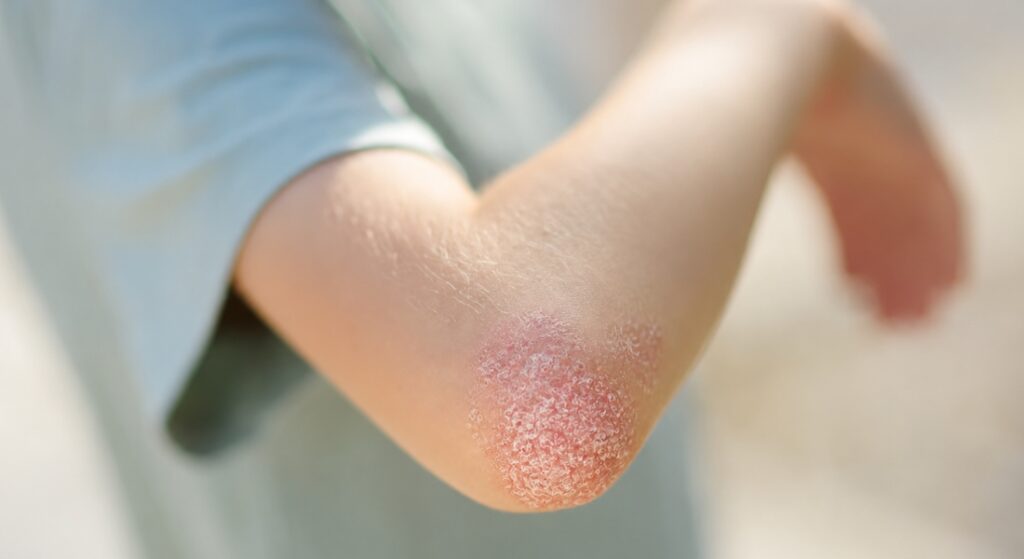
Plaque psoriasis is the most common type of psoriasis in children. It causes well-defined patches of inflamed skin covered with dry, flaky scales. In children, these plaques are often thinner and less heavily scaled than those seen in adults.
Patches often appear on your child’s elbows, knees, scalp, lower back, behind the ears or around the belly button. They can also develop in areas where the skin is repeatedly rubbed, scratched or injured. Because the patches can be itchy, they are sometimes mistaken for eczema or other common skin conditions.
Your child may have only a few small plaques, or larger areas of skin may be affected. The severity of psoriasis is not judged by size alone, as the location, discomfort, sleep disruption and impact on everyday life are equally important. With the right treatment, you can often help keep your child’s symptoms under good control.
Guttate Psoriasis and Its Link With Infections
Guttate psoriasis is a type of psoriasis that causes many small, drop-like scaly patches to appear on your child’s skin. These patches often develop on the chest, back, arms or legs and are more common in children, teenagers and young adults. The rash can appear quite suddenly and spread over several areas of the body.
You may notice the rash developing after your child has had a sore throat or another infection, particularly a streptococcal throat infection. In some cases, the skin changes appear while your child is still unwell, while in others they develop a few weeks later. Your healthcare professional may ask about recent illnesses or arrange further tests if an active infection is suspected.
Treating a confirmed bacterial infection is important, but antibiotics are not a treatment for psoriasis itself. The skin may take time to improve even after the infection has cleared. Some children experience only one episode, while others may have repeated flare-ups or develop another type of psoriasis over time.
Scalp Psoriasis
The scalp is one of the most common areas affected by juvenile psoriasis. You may notice thick flakes, well-defined scaly patches or redness that extends beyond your child’s hairline, around the ears or onto the back of the neck. These symptoms can range from mild scaling to more widespread inflammation.
Scalp psoriasis is often mistaken for dandruff, cradle cap or other common scalp conditions. Unlike ordinary dandruff, psoriasis usually causes thicker, more persistent scales and may also affect other parts of your child’s body, such as the elbows, knees or around the belly button. Looking at the overall pattern of symptoms can help your healthcare professional make the correct diagnosis.
Your child may scratch their scalp because of itching, which can lead to soreness, crusting or temporary hair shedding. Psoriasis does not usually cause permanent hair loss, and the hair normally grows back once the inflammation is under control. Treatments such as medicated shampoos, lotions, gels or foams can make scalp psoriasis easier to manage, depending on your child’s age and hair type.
Psoriasis on the Face and in Skin Folds
Facial psoriasis is seen proportionally more often in children than in adults, with patches commonly appearing around the eyebrows, eyelids, ears, or hairline. It can also develop in skin folds, where the appearance and treatment needs may be different from psoriasis on other parts of the body.
- Psoriasis on the Face: You may notice patches around your child’s eyebrows, eyelids, ears, or hairline, which can be particularly noticeable and affect their confidence.
- Psoriasis in Skin Folds: Also known as flexural or inverse psoriasis, it commonly affects the armpits, groin, between the buttocks, and other areas where skin rubs together.
- Different Appearance: Because skin folds are warm and moist, the patches are often smooth and shiny rather than dry and heavily scaly. They may appear red, purple, brown, grey or darker than the surrounding skin, depending on your child’s skin tone.
- Gentle Treatment Is Essential: The skin on the face and in skin folds is delicate, so you should only use treatments recommended by your child’s healthcare professional to reduce the risk of irritation and side effects.
With the right treatment and skincare advice, psoriasis in these sensitive areas can often be managed effectively. If your child’s symptoms change or become more troublesome, speak to their healthcare professional about the most appropriate treatment options.
Nappy Psoriasis in Babies and Toddlers
Psoriasis can develop in your baby’s nappy area during infancy or early childhood. You may notice well-defined patches of pink, red, purple or darker skin that extend into the groin creases. Because the rash can look similar to other common skin conditions, it is important to have it assessed if it does not improve.
Unlike a typical nappy rash, nappy psoriasis often affects the skin folds as well as the surrounding area. You may also notice psoriasis on your child’s scalp, behind the ears, around the belly button or on the arms and legs. Although a family history can increase the likelihood of psoriasis, many children develop the condition without any known family history.
You can help reduce irritation by changing nappies frequently, keeping your child’s skin clean and dry, and using gentle skincare products. If the rash continues or keeps coming back, your child should be examined by a healthcare professional. The right diagnosis is important because antifungal treatments alone will not improve psoriasis unless a fungal infection is also present.
Nail Changes Associated With Psoriasis
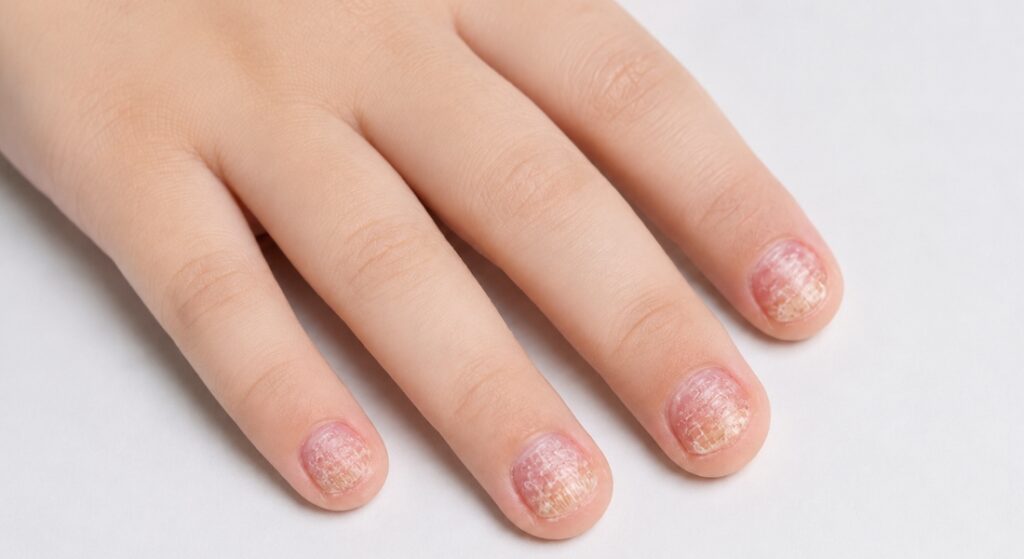
Psoriasis can affect your child’s fingernails, toenails or both. You may notice small pin-like dents in the nail surface, known as nail pits, along with thickening, discolouration or ridges. In some cases, the nail may begin to lift away from the nail bed.
These nail changes can sometimes be mistaken for a fungal nail infection. Your healthcare professional may recommend tests if there is any uncertainty about the cause. Nail psoriasis can make everyday activities such as writing, playing sports or wearing shoes less comfortable.
Because nails grow slowly, improvement usually takes longer than it does for skin symptoms. With the right treatment and patience, you can often see gradual improvement over several months.
Itching, Pain and Sleep Disturbance
Psoriasis is more than a visible skin condition, and your child may experience itching, soreness or pain. The itching can become worse at night, after sweating or when the skin becomes dry. Cracked skin may also sting, especially on the hands, feet or other areas exposed to frequent movement.
These symptoms can make it difficult for your child to sleep well. Poor sleep may leave them feeling tired, irritable or less able to concentrate at school and during everyday activities. Younger children may struggle to explain how they feel and instead become unsettled or distressed.
When you speak to your child’s healthcare professional, mention symptoms such as itching, pain and disturbed sleep as well as changes in the appearance of the skin. Even if psoriasis affects only a small area, these symptoms can have a significant impact on your child’s quality of life and help guide the most appropriate treatment.
Common Psoriasis Triggers
Certain factors can trigger a psoriasis flare if your child is already prone to the condition. These triggers are different for every child, and it is not always possible to identify a clear cause. Keeping track of symptoms over time can help you recognise possible patterns.
Infections are one of the most common triggers in children, particularly sore throats, colds and ear infections. Skin injuries such as cuts, grazes, insect bites, sunburn or frequent scratching can also cause new patches of psoriasis to develop. Emotional stress may also contribute to flare-ups, although it does not cause psoriasis on its own.
Some medicines may worsen psoriasis in certain children, but you should never stop a prescribed medicine without speaking to your healthcare professional. Keeping a simple diary of infections, treatments and skin changes can help you understand what may be triggering your child’s flare-ups. Remember that your child is not responsible for causing their psoriasis.
Psoriatic Arthritis and Joint Symptoms
Psoriasis can sometimes affect your child’s joints as well as their skin. This condition is known as psoriatic arthritis or juvenile psoriatic arthritis. Joint symptoms may appear before, after or at the same time as skin symptoms.
You should watch for ongoing joint pain, swelling, stiffness or difficulty moving, particularly in the morning or after periods of rest. Your child may also develop swelling of an entire finger or toe, limp, avoid physical activities or stop using one hand as they normally would. Younger children may show these changes through their behaviour rather than describing pain.
If you notice recurring joint symptoms, it is important to speak to your child’s GP or dermatologist. Early assessment and treatment can help control inflammation, relieve discomfort and protect your child’s joints as they continue to grow and develop.
The Emotional and Social Impact
Psoriasis can affect much more than your child’s skin. Even a small patch on the face, scalp or hands may make them feel self-conscious or attract unwanted attention from other children. This can have a significant impact on their confidence and emotional wellbeing.
You may notice your child avoiding activities such as swimming, PE lessons, parties or sleepovers because they feel embarrassed about their skin. Older children and teenagers may worry about friendships or fear that others think psoriasis is contagious. Managing daily treatments and regular appointments can also become frustrating and make them feel different from their peers.
Try to encourage your child to talk openly about how psoriasis is affecting them both physically and emotionally. Listening without judgement can help them feel supported and understood. If you notice ongoing anxiety, low mood or reluctance to attend school, speak to your healthcare professional about additional emotional or school-based support.
Evidence Note
A 2025 systematic review found that paediatric psoriasis can affect itching, pain, sleep, leisure activities, emotional wellbeing and family life. Treatment decisions should therefore consider the condition’s physical and psychosocial impact rather than judging severity only by the amount of skin affected.
How Juvenile Psoriasis Is Diagnosed
There is no single blood test that confirms juvenile psoriasis. Your healthcare professional will diagnose the condition by reviewing your child’s symptoms, medical history and family history, along with a careful examination of their skin, scalp and nails.
They may also examine areas such as the ears, belly button, groin and other skin folds, where psoriasis commonly appears. You may be asked about recent infections, skin injuries or joint symptoms that could support the diagnosis.
Because several skin conditions can look similar, your healthcare professional will consider all of your child’s symptoms before making a diagnosis. If needed, they may arrange further assessment or follow-up to confirm the condition.
Conditions That Can Resemble Psoriasis
Several skin conditions can look similar to juvenile psoriasis, especially in young children. Eczema is one of the most common, but seborrhoeic dermatitis, fungal infections and contact dermatitis can also cause scaly or inflamed patches. This is why it is important not to diagnose the condition based on appearance alone.
Your healthcare professional will carefully examine your child’s skin and consider where the rash appears. They will also ask about your child’s symptoms, medical history and family history to help identify the underlying cause. Looking at the overall pattern is often enough to make an accurate diagnosis.
A skin biopsy is only needed in a small number of cases. It may be recommended if the rash looks unusual, does not respond to treatment or another skin condition needs to be ruled out. This helps ensure your child receives the most appropriate care.
When Your Child Should See a Dermatologist
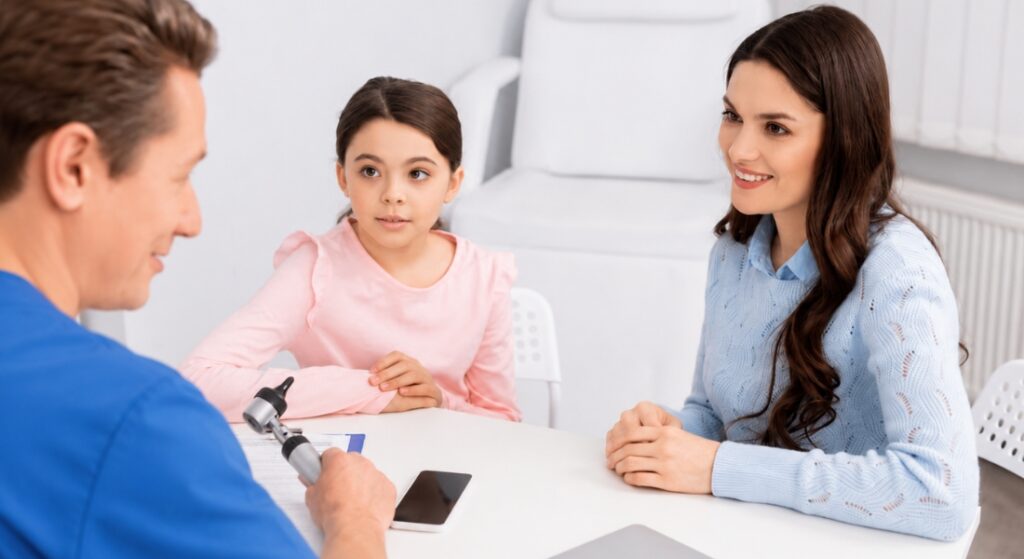
Under NICE guidance, children and young people with any type of psoriasis should be referred for specialist assessment at presentation. A dermatologist can help confirm the diagnosis, assess the physical and emotional impact of the condition and recommend treatments that are appropriate for your child’s age and the areas affected.
Specialist assessment is particularly important if psoriasis is widespread, affects the face, scalp, hands, feet, nails or genital area, or is disrupting your child’s sleep, confidence, school attendance or everyday activities. Your child should also be assessed promptly if they develop persistent joint pain, swelling, stiffness or difficulty moving.
A dermatologist can create a treatment plan tailored to your child’s needs and explain how to use each medicine safely. Regular reviews allow the plan to be adjusted as your child grows or if their symptoms change.
UK Guidance Note
NICE recommends specialist referral when a child or young person first presents with psoriasis symptoms. Generalised pustular psoriasis and erythroderma both require immediate, same-day specialist assessment.
Symptoms That Need Urgent Medical Attention
Most psoriasis flare-ups can be managed without emergency treatment. However, you should seek urgent medical advice if your child’s skin becomes rapidly inflamed, the rash spreads across a large area of the body or they suddenly become very unwell.
Seek same-day urgent medical assessment if your child develops widespread severe inflammation or a marked change in skin colour accompanied by extensive peeling, widespread pus-filled bumps, fever, shivering, severe pain, marked tiredness or rapid deterioration in their general health. Generalised pustular psoriasis and erythroderma are uncommon but serious conditions that require immediate specialist assessment.
You should also seek urgent help if your child shows signs of dehydration, such as a very dry mouth, significantly reduced urination, dizziness or unusual drowsiness. If your child is extremely unwell, difficult to wake or deteriorating rapidly, call 999 or go to A&E. Do not apply stronger treatments or change prescribed medicines without medical advice.
How a Treatment Plan Is Chosen
Your child’s treatment plan will depend on several factors, not just how much skin is affected. Your healthcare professional will consider the type of psoriasis, where it appears, the severity of symptoms and how it affects your child’s daily life. Your child’s age and individual needs will also help guide the treatment choice.
A treatment plan that fits realistically into your family’s routine is more likely to be followed consistently. Your healthcare professional will balance practicality with your child’s age, psoriasis severity, affected areas and individual treatment needs.
Psoriasis treatment often needs to be reviewed and adjusted over time. Some treatments take time to produce noticeable improvement. However, if your child’s symptoms are not improving within the expected timeframe, are becoming worse or are causing side effects, contact their healthcare professional so the treatment plan can be reviewed. Regular follow-up appointments help ensure your child receives the most appropriate care as their needs change.
Treatment Options for Juvenile Psoriasis at a Glance
| Treatment Option | When It May Be Recommended | Main Aim of Treatment |
| Emollients and Gentle Skincare | For all children with psoriasis as part of everyday skin care. | To keep the skin moisturised, reduce dryness, support the skin barrier, and improve comfort. |
| Topical Treatments | For mild or localised psoriasis affecting smaller areas of the body. | To reduce inflammation, slow skin cell build-up, and control flare-ups. |
| Specialised Treatments for the Scalp, Face and Sensitive Areas | When psoriasis affects delicate areas that require different medicines or formulations. | To manage symptoms safely while reducing the risk of irritation and side effects. |
| Phototherapy | If psoriasis is more widespread or has not improved with topical treatments alone. | To reduce inflammation and slow skin cell growth using controlled ultraviolet light. |
| Specialist Tablets or Injections (Systemic Treatments) | For moderate to severe psoriasis when topical treatment has not provided adequate control, or when phototherapy is ineffective, unsuitable or impractical. | To control inflammation throughout the body and achieve longer-term symptom control. |
Emollients and Gentle Skincare
Emollients are moisturising products that help keep your child’s skin soft, reduce dryness and improve comfort. Although they do not treat the underlying inflammation, they support the skin barrier and can help other psoriasis treatments work more effectively. Using them regularly is an important part of daily skincare.
Your healthcare professional can recommend an emollient that suits your child’s skin and lifestyle. Ointments are often better for very dry skin, while creams and lotions may be easier to apply during the day or on the scalp. The best option is one that your child is happy to use consistently.
Emollient residue can build up on clothing, bedding, dressings and other fabrics and make them burn more easily. This risk applies to paraffin-containing and paraffin-free products. Keep your child and treated fabrics away from naked flames, cigarettes and other ignition sources, and wash clothing and bedding regularly.
Clinical Tip
Apply emollients in the direction of hair growth and gently pat the skin rather than rubbing to avoid irritation.
Topical Treatments for Active Psoriasis
Topical treatments are usually the first option for managing mild or localised juvenile psoriasis. These medicines are applied directly to your child’s skin to reduce inflammation, relieve symptoms and slow the build-up of skin cells. Your healthcare professional will choose the most suitable treatment based on your child’s age and the areas affected.
Common topical treatments include corticosteroids, vitamin D-based creams and other anti-inflammatory medicines. Corticosteroids can work quickly to control flare-ups, but they should only be used as directed to reduce the risk of side effects. Your healthcare professional will explain how much to apply and how long the treatment should be used.
Some topical treatments may be prescribed outside their official licence for children. Off-label use means that a medicine is being used outside the exact age, condition or instructions stated in its licence. It does not automatically mean the treatment is unsuitable, but the prescriber should explain why it is recommended, how it should be used and what possible side effects to watch for. Following your child’s treatment plan carefully can help achieve the best possible results.
Treating the Scalp, Face and Sensitive Areas
Different parts of your child’s body may need different psoriasis treatments. A cream or ointment that works well on the elbows or knees may not be suitable for the scalp, face or skin folds. Your healthcare professional will choose the most appropriate treatment for each area.
For scalp psoriasis, treatment may include products that help soften thick scales before applying anti-inflammatory medicines. The face and other sensitive areas usually require gentler treatments to reduce the risk of irritation and side effects. Your healthcare professional will advise you on the safest option for your child.
Always follow the instructions for each prescribed treatment and only apply it to the recommended areas. Wash your hands after applying the medicine and let your healthcare professional know if your child’s skin becomes painful, unusually thin or more inflamed during treatment.
Phototherapy for More Extensive Psoriasis
Phototherapy is a treatment that uses carefully controlled ultraviolet light to reduce inflammation and slow the build-up of skin cells. It may be recommended if your child’s psoriasis is more widespread or has not improved with topical treatments alone. The treatment is carried out under the supervision of a dermatology team.
Phototherapy is usually delivered through a specialist dermatology service using carefully calibrated medical equipment. Do not use sunbeds or independently purchased home UV lamps as an alternative. In selected circumstances, a dermatology service may arrange a medically prescribed and supervised home-phototherapy programme.
Although natural sunlight may improve psoriasis in some children, too much sun can cause sunburn and trigger a flare-up. Sunbeds should never be used as an alternative to medical phototherapy because they are not a safe or appropriate treatment for children.
Tablets, Injections and Long-Term Outlook
If your child has moderate to severe psoriasis that is not adequately controlled with topical treatment, or if phototherapy has not helped or is not suitable, their dermatologist may consider a systemic medicine.
Before starting these treatments, your child may need blood tests, infection screening and other health checks. Regular follow-up appointments are also important to monitor how well the treatment is working and to check for any possible side effects. Your dermatologist will explain the benefits and any monitoring your child may need.
Although there is currently no cure for psoriasis, many children achieve long periods of good symptom control with modern treatments. As your child grows, their treatment plan can be reviewed and adjusted to suit their changing needs. With the right care and ongoing support, most children can continue to enjoy everyday activities with confidence.
Myth vs Fact
| Myth | Fact |
| Psoriasis is contagious | Juvenile psoriasis is immune-mediated and not contagious. |
| Poor hygiene causes psoriasis | Psoriasis is not caused by poor hygiene, a particular food or parenting. A balanced diet still supports your child’s general health. |
| Psoriasis only affects skin | It can affect nails and joints (psoriatic arthritis). |
| Children outgrow psoriasis | It may persist, with flare-ups, but can be managed effectively. |
Key Takeaways
- Psoriasis is not contagious: Your child cannot pass it to another person through contact, school, swimming or shared belongings.
- Appearance varies: Plaques may look red, pink, purple, brown or grey depending on your child’s skin tone.
- Specialist assessment is recommended: NICE advises specialist referral for children and young people with psoriasis at presentation.
- Treatment is individual: Options range from emollients and topical medicines to phototherapy and specialist systemic treatments.
- Some symptoms require urgent help: Widespread inflammation, peeling, pustules, fever or sudden illness need same-day medical assessment.
- Emotional wellbeing matters: Tell the healthcare team if psoriasis is affecting sleep, school, confidence or social activities.
Frequently Asked Questions
1. What is juvenile psoriasis?
Juvenile psoriasis is a long-term inflammatory skin condition that develops during childhood or adolescence. It causes skin cells to build up more quickly than normal, leading to well-defined, scaly patches on the skin or scalp and, in some children, changes affecting the nails. Although there is no cure, the condition can often be managed successfully with the right treatment and ongoing care.
2. What are the first signs of psoriasis in children?
The first signs often include red, pink, purple, brown or grey patches of skin with a dry, scaly surface, depending on your child’s skin tone. Your child may also experience itching, soreness or flaky patches on the scalp, elbows, knees, or behind the ears. Some children develop a sudden rash of small, drop-like spots after a throat infection.
3. What can trigger psoriasis flare-ups in children?
Common triggers include infections such as sore throats, skin injuries, emotional stress, hormonal changes and, in some cases, certain medicines. Every child is different, so keeping a record of flare-ups may help you identify patterns and discuss them with your child’s healthcare professional.
4. Is juvenile psoriasis contagious?
No. Juvenile psoriasis is not contagious and cannot spread from one child to another through touching, sharing toys, swimming or attending school. It is an immune-mediated condition rather than an infection. However, infections such as streptococcal throat infections can trigger psoriasis or contribute to a flare in some children.
5. How is juvenile psoriasis diagnosed?
A healthcare professional will usually diagnose juvenile psoriasis by examining your child’s skin, scalp and nails, while also asking about their symptoms, medical history and any family history of psoriasis. There is no single blood test that confirms the condition, although further investigations may occasionally be needed if the diagnosis is uncertain.
6. What treatments are available for juvenile psoriasis?
Treatment depends on the type and severity of your child’s psoriasis. Options may include regular emollients, topical treatments, specialised medicines for the scalp or sensitive areas, phototherapy, and, for more severe cases, tablets or injections. Your child’s treatment plan will be tailored to their individual needs.
7. Can psoriasis affect more than your child’s skin?
Yes. Psoriasis can also affect your child’s nails, causing pitting, thickening or discolouration. A small number of children may develop psoriatic arthritis, which can cause joint pain, swelling and stiffness. If your child develops joint symptoms, they should be assessed promptly.
8. When should your child see a dermatologist for psoriasis?
Under NICE guidance, children and young people with any type of psoriasis should be offered specialist referral when they first present with symptoms. Specialist assessment is particularly important if the diagnosis is uncertain, psoriasis affects sensitive or highly visible areas, treatments are not controlling the symptoms, or the condition is affecting sleep, school, confidence or daily activities. Joint pain, swelling or stiffness also requires prompt assessment.
9. Can children with psoriasis continue their usual activities?
Yes. With appropriate treatment, regular skincare and ongoing follow-up, most children can continue attending school, taking part in sport and enjoying their usual activities. Treatment may need to be adjusted during flare-ups, but many children experience long periods of good symptom control.
10. Will your child always have psoriasis?
Psoriasis is generally considered a long-term inflammatory condition, but its course varies considerably. Some children experience recurring flare-ups, while others, particularly those who have a single episode of guttate psoriasis, may remain clear for long periods. Regular reviews can help ensure that treatment remains appropriate if symptoms return or change.
Final Thoughts: Supporting Your Child with Juvenile Psoriasis
Although juvenile psoriasis is a long-term condition, it can often be managed successfully with the right diagnosis, treatment plan and ongoing care. Recognising symptoms early and understanding your child’s individual triggers can help reduce flare-ups and improve their comfort, confidence and overall quality of life.
If you are looking for specialist care from a paediatric dermatologist in London, the team at London Dermatology Centre can provide a thorough assessment, help confirm the diagnosis and recommend a personalised treatment plan tailored to your child’s needs. With expert guidance and regular follow-up, your child can achieve better symptom control and continue to enjoy everyday activities with confidence.
References:
- National Institute for Health and Care Excellence (NICE) (2012, updated 2017; minor updates 2025) ‘Psoriasis: assessment and management (Clinical guideline CG153)’. Available at: https://www.nice.org.uk/guidance/cg153
- British Association of Dermatologists (BAD) (2026) ‘Psoriasis in children and young people’. Updated February 2026. Available at: https://www.bad.org.uk/pils/psoriasis-in-children-and-young-people
- NHS (2026) ‘Psoriasis’. Page last reviewed 10 March 2026. Available at: https://www.nhs.uk/conditions/psoriasis/
- Medicines and Healthcare products Regulatory Agency (MHRA) (2018) ‘Emollients: new information about risk of severe and fatal burns with paraffin-containing and paraffin-free emollients’. Drug Safety Update, published 18 December 2018. Available at: https://www.gov.uk/drug-safety-update/emollients-new-information-about-risk-of-severe-and-fatal-burns-with-paraffin-containing-and-paraffin-free-emollients
- Menter, A., Cordoro, K.M., Davis, D.M.R. et al. (2020) ‘Joint American Academy of Dermatology–National Psoriasis Foundation guidelines of care for the management and treatment of psoriasis in pediatric patients’, *Journal of the American Academy of Dermatology*, 82(1), pp. 161–201. Available at: https://pubmed.ncbi.nlm.nih.gov/31703821/
- Peris, K., Belloni Fortina, A., Bianchi, L. et al. (2022) ‘Update on the management of pediatric psoriasis: an Italian consensus’, Dermatology and Therapy, 12(8), pp. 1753–1775. Available at: https://pubmed.ncbi.nlm.nih.gov/35776408/
- Yang, A., Cheng, B., Seyger, M.M.B. et al. (2025) ‘The burden of pediatric psoriasis: a systematic review’, *American Journal of Clinical Dermatology*, 26(5), pp. 695–710. Available at: https://pubmed.ncbi.nlm.nih.gov/40694272/
- Bronckers, I.M.G.J., Paller, A.S., van Geel, M.J., van de Kerkhof, P.C.M. and Seyger, M.M.B. (2015) ‘Psoriasis in children and adolescents: diagnosis, management and comorbidities’, *Paediatric Drugs*, 17(5), pp. 373–384. Available at: https://pubmed.ncbi.nlm.nih.gov/26072040/