


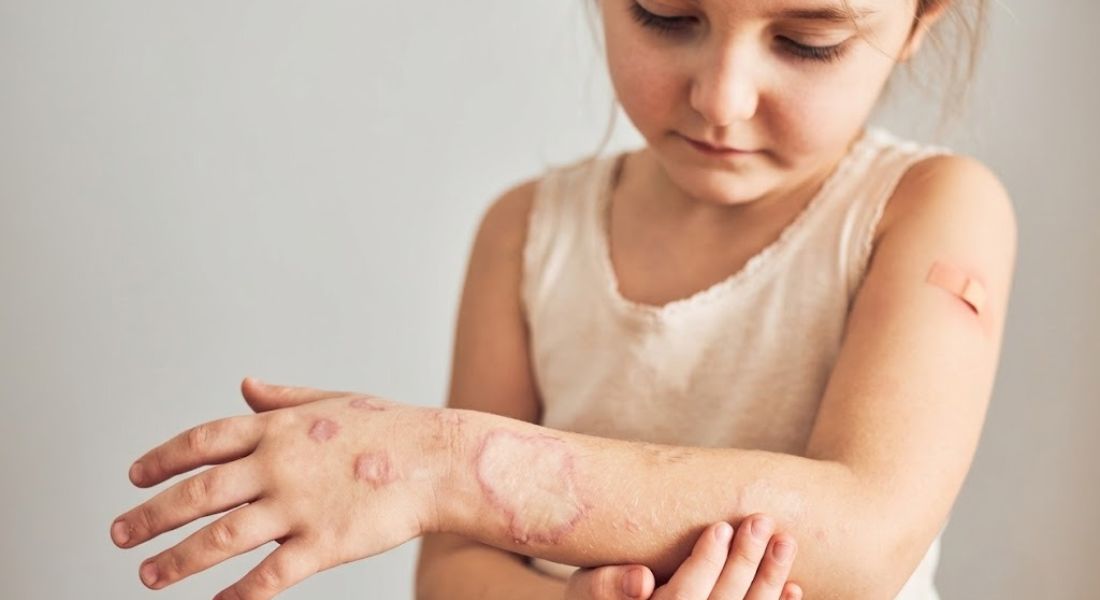
Morphea, also known as localised scleroderma, is a rare inflammatory skin condition that can affect children. It causes patches of skin to become hardened, thickened, shiny, or discoloured. In some children, the condition can also affect deeper tissues, including fat, muscle, joints, or bone.
Hearing the word “scleroderma” can be worrying, but it is important to know that morphea is different from systemic sclerosis. Morphea mainly affects the skin and the tissues beneath it rather than the internal organs. However, some forms can lead to complications if they are not recognised and treated early.
You may first notice a bruise-like patch, an area of skin that feels firm or tight, a pale or darker mark, or a line of thickened skin on your child’s arm or leg. Because the early signs can resemble a bruise, scar, eczema, or a birthmark, the diagnosis is sometimes delayed.
Early assessment by a specialist is important because treatment is most effective while the condition is still active. The aim is to reduce inflammation, prevent the condition from spreading, protect your child’s growth and movement, and lower the risk of long-term tissue damage.
What Is Morphea in Children?
Morphea is a rare inflammatory condition in which inflammation leads to excess collagen being deposited in affected areas of your child’s skin and, in some cases, the tissues beneath it. Collagen is a normal structural protein, but excessive build-up can make the affected skin feel hard, tight or less flexible.
In children, morphea may appear as a patch, plaque, line, or band of hardened skin. You may notice changes in your child’s skin colour, texture, or thickness on the trunk, arms, legs, face, or scalp, and some children develop more than one affected area.
It is important to know that morphea is not contagious. Your child cannot catch it from someone else or pass it on through touching, playing, swimming, or sharing towels, which can help reassure both your family and your child’s school.
Why It Is Called Localised Scleroderma
The word scleroderma means “hard skin.” Morphea is called localised scleroderma because the hardening is mainly limited to your child’s skin and the tissues just beneath it. Unlike systemic sclerosis, morphea does not cause the characteristic widespread blood-vessel and internal-organ disease associated with systemic sclerosis. However, deeper or craniofacial forms can affect tissues beneath the skin and may be associated with joint, eye, dental or neurological complications.
You may hear the terms morphea and localised scleroderma used interchangeably, as they describe the same condition. Although morphea mainly affects the skin, some children can develop inflammation in deeper tissues such as fat, muscle, joints, or bone, particularly in more severe forms.
Understanding this difference can be reassuring for parents. While morphea can sometimes affect your child’s growth, movement, or facial development if left untreated, it is not the same condition as systemic sclerosis. Your child’s dermatologist will explain which type they have and whether any ongoing monitoring or treatment is needed.
How Common Is Morphea in Children?
Morphea is rare in childhood, with an estimated annual incidence of approximately 1 to 3 cases per 100,000 children. Morphea is reported more frequently in girls than in boys.
Because the condition is uncommon, you may never have heard of it before your child’s diagnosis. The early signs can resemble bruising, eczema, a scar, or changes in skin pigmentation, so some children see several healthcare professionals before the correct diagnosis is made.
Although morphea is rare, effective treatments are available. Once your child has been assessed, the specialist can determine how active and extensive the condition is and recommend the most appropriate treatment and follow-up plan.
What Morphea Can Look Like
Morphea can look quite different depending on how active the condition is. You may first notice a pink, purple, reddish-brown, bruise-like, darker, or lighter patch of skin that feels different from the surrounding area. The edge may appear inflamed, while the centre gradually becomes firmer over time.
As the condition progresses, the affected skin can become hard, thickened, smooth, shiny, waxy, or ivory-coloured. In deeper forms of morphea, you may notice that the area looks slightly sunken because the fat or tissue beneath the skin has also been affected, making the skin feel tighter and less flexible.
If your child has a darker skin tone, changes in skin colour may be more noticeable and can remain even after the inflammation has settled. Texture, firmness, and changes in the way the skin feels are often just as important as colour when your child’s dermatologist assesses morphea.
Early Signs Parents May Notice
You may first notice a patch of skin that does not behave like an ordinary bruise. Instead of fading over time, it may gradually become firmer, smoother, tighter, or thicker than the surrounding skin. The affected area may also feel different when you touch it.
Some children experience itching, tingling, tenderness, or mild discomfort, while others have no symptoms at all. Because the early changes are often subtle, morphea can be easy to overlook until the skin becomes more noticeably firm or your child mentions that it feels tight when moving.
You should arrange a specialist assessment if you notice a patch that is spreading, becoming harder, forming a line, crossing a joint, or appearing on your child’s face or scalp. These features can increase the risk of complications and are best assessed as early as possible.
Plaque Morphea
Plaque morphea is a common form of the condition and usually causes one or more oval or rounded areas of affected skin. In children, however, linear morphea is generally the most frequently recognised subtype.
In some children, plaque morphea remains mild and affects only the surface of the skin. Your child’s dermatologist may recommend topical treatment or careful monitoring if the condition is limited, but an assessment is still important because the depth and activity of the condition are not always obvious in the early stages.
Even after plaque morphea becomes inactive, it can leave changes in skin colour, texture, or thickness. Starting treatment while the condition is active may help reduce the risk of long-term skin changes and improve the overall outcome.
Linear Morphea
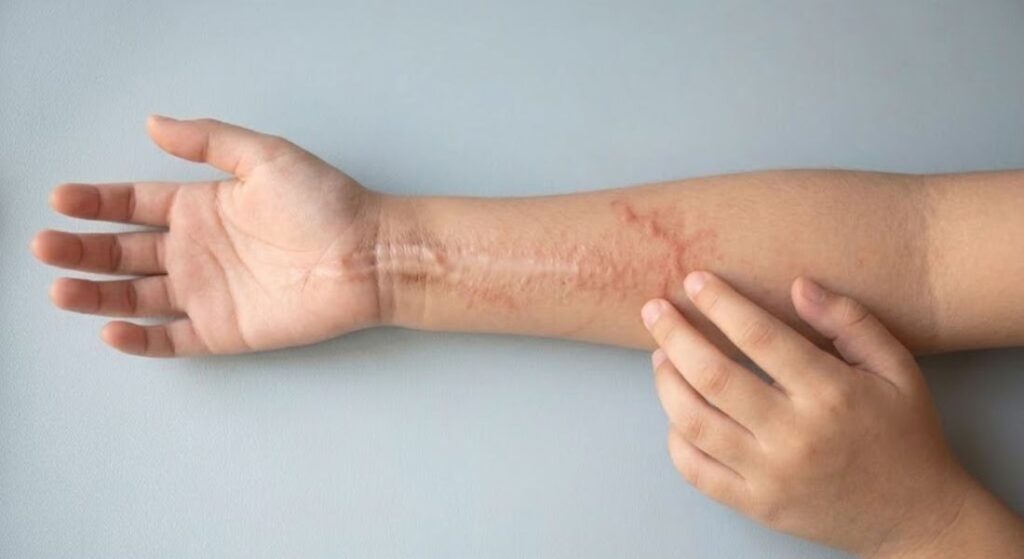
Linear morphea is the most common subtype of morphea seen in children. You may notice a line or band of hardened skin on your child’s arm, leg, trunk, face, or scalp. Unlike plaque morphea, this form can extend into deeper tissues as well as the skin.
If the affected area crosses a joint, it can make movement more difficult as the skin and underlying tissues become tighter. When linear morphea affects a growing limb, it may also influence bone growth and lead to differences in limb size or length, which is why early treatment is often recommended.
Linear morphea often requires care from more than one specialist. Depending on which part of your child’s body is affected, your dermatologist may work alongside paediatric rheumatologists, physiotherapists, orthopaedic specialists, and other healthcare professionals to help protect movement, growth, and long-term function.
Morphea on the Face or Scalp
Morphea affecting your child’s face or scalp requires careful assessment because it can involve deeper tissues as well as the skin. One type, called en coup de sabre, appears as a firm line on the forehead or scalp and may look like a narrow groove or a scar-like band.
In some children, facial morphea can affect the fat, muscle, bone, teeth, jaw, or eyes, and in rare cases it may also be associated with changes involving the nervous system. The likelihood of these complications depends on the type, location, and extent of the condition.
European consensus recommendations advise MRI of the head at diagnosis for children with juvenile localised scleroderma affecting the face or scalp, even when obvious neurological symptoms are absent. Ophthalmology assessment is also recommended, while orthodontic and maxillofacial evaluation should be arranged for craniofacial disease at diagnosis and during follow-up. These recommendations are largely consensus-based because high-quality evidence for screening craniofacial complications remains limited.
Can Morphea Affect Joints or Growth?
Morphea can sometimes affect the deeper tissues beneath your child’s skin, including fat, muscle, fascia, bone, and joints. When this happens, your child may develop tightness, pain, reduced movement, or visible changes in the shape of the affected area. These changes are especially important in growing children because they can influence normal development.
If morphea crosses a joint, the skin and underlying tissues may tighten over time, making it harder for your child to move that joint fully. Your child’s specialist may recommend physiotherapy to help maintain flexibility, improve movement, and reduce the risk of long-term stiffness or contractures.
When deeper tissues or bones are involved, differences in limb growth or size can occasionally occur. Early diagnosis and treatment are important because controlling active inflammation can help reduce the risk of permanent damage and support your child’s normal growth and development.
What Causes Morphea?
The exact cause of morphea is not fully understood. Experts believe it develops because your child’s immune system triggers inflammation that leads to excess collagen building up in the skin. Genetics and environmental factors may also increase the likelihood of the condition in some children.
Morphea is often described as an autoimmune or immune-mediated condition, but it is not caused by anything you or your child did. Parents should not blame themselves, as there is no evidence that diet, hygiene, or everyday activities cause morphea.
Morphea has sometimes been reported after local skin trauma, an insect bite, an injection or repeated friction. However, this does not prove that the event caused the condition, and in most children no clear trigger can be identified.
Conditions That Can Look Similar
Several skin conditions can look similar to morphea, particularly in the early stages. You may mistake it for a bruise, birthmark, scar, eczema, lichen sclerosus, a fungal infection, a pigmentation change, or another inflammatory skin condition. Because these conditions can appear alike, it is not always possible to make the correct diagnosis by appearance alone.
You should pay particular attention to a bruise-like patch that does not fade as expected or gradually becomes harder, larger, or tighter. Unlike an ordinary bruise, morphea often becomes more clearly defined over time rather than disappearing.
A dermatologist can examine your child’s skin carefully and decide whether any further tests are needed. Getting an accurate diagnosis is important because the treatment for morphea is different from the treatment used for other skin conditions.
How Morphea Is Diagnosed
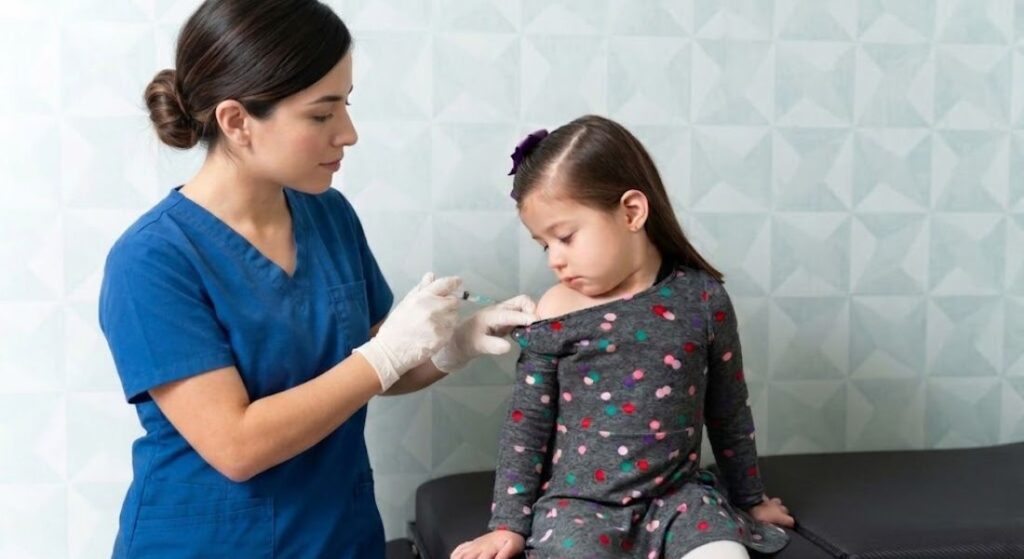
Morphea is usually diagnosed through a careful clinical examination. Your child’s dermatologist will assess the appearance, texture, location, depth, and pattern of the affected skin, as well as how it has changed over time. These features often provide enough information to make the diagnosis.
During the appointment, you may be asked when the patch first appeared, whether it has spread or become firmer, and whether your child has pain, itching, stiffness, or difficulty with movement. The specialist may also ask about growth, headaches, eye or dental symptoms, joint pain, and any family history of autoimmune conditions.
In many children, a skin examination is all that is needed to diagnose morphea. However, if the diagnosis is unclear or another condition is suspected, your child’s dermatologist may recommend a skin biopsy or other investigations. Blood tests may occasionally be used to assess general health or investigate an associated condition, but they cannot confirm morphea on their own.
Tests That May Be Recommended
An MRI scan may be useful when a lesion crosses a joint or when deeper involvement of muscle, fascia or bone is suspected. For morphea affecting the face or scalp, European consensus recommendations advise MRI of the head at diagnosis because neurological changes can occasionally be present without obvious symptoms.
A skin biopsy may be performed when the diagnosis is uncertain or another condition needs to be excluded. Blood tests may be used to assess general health, inflammation or suspected associated autoimmune disease, but they cannot confirm morphea or reliably measure its activity on their own.
The investigations your child needs should be selected according to the location, depth and pattern of disease rather than applied as the same routine panel for every child.
Why Early Treatment Matters
Early treatment is important because active morphea can continue to spread or affect deeper tissues over time. If your child’s skin, joints, or growing bones become damaged, these changes can be more difficult to reverse. Starting treatment while the condition is still active offers the best chance of limiting long-term complications.
The main goal of treatment is to stop the condition from progressing rather than to remove every visible mark. Although your child’s skin may gradually soften and improve, changes in colour or texture can sometimes remain even after the inflammation has settled.
It is important to have realistic expectations during treatment. Improvement is often gradual, and your child’s specialist will focus on protecting their growth, movement, comfort, and long-term skin health while monitoring the condition closely.
Treatment is generally more effective at controlling active inflammation than reversing established skin thinning, tissue loss, contractures or growth differences. This is why early recognition and appropriate treatment are particularly important for linear, deep and craniofacial disease.
Evidence Note
A long-term retrospective study involving 133 children with juvenile localised scleroderma reported at least one relapse in 22.2% of patients, while 19.8% developed some degree of functional limitation. A delay in starting systemic treatment was associated with longer disease activity and a greater likelihood of relapse.
This was a single specialist-centre observational study, so the percentages should not be used to predict exactly what will happen to an individual child. However, the findings support prompt diagnosis, appropriate treatment for higher-risk disease and continued follow-up, particularly for linear, deep, pansclerotic or mixed forms.
Topical Treatment Options
Topical treatments may be recommended for selected children with mild, superficial and limited morphea. Your dermatologist may prescribe a potent corticosteroid cream or ointment, tacrolimus ointment or another topical treatment to help reduce disease activity.
These treatments are not usually sufficient for linear or deep morphea, facial disease, patches crossing joints or disease that threatens growth, movement or long-term function. In these situations, systemic treatment may be recommended to control active inflammation and reduce the risk of complications.
You should only use topical treatments exactly as prescribed by your child’s dermatologist. Children’s skin is more sensitive to side effects from strong steroid creams, so your specialist will explain where to apply the medicine, how often to use it, and how long treatment should continue.
Systemic Treatments
Systemic treatments are medicines that work throughout your child’s body rather than only on the skin. They are usually recommended when morphea is active, deep, rapidly spreading, or affecting areas that could influence growth, movement, or joint function. Your child’s specialist will carefully decide whether these medicines are needed and will monitor treatment closely.
Methotrexate is one of the most commonly used medicines for children with more severe morphea. Corticosteroids may also be given at the beginning of treatment to reduce inflammation quickly while methotrexate takes effect, particularly in children with active linear or generalised morphea.
These medicines require regular follow-up to monitor your child’s response and check for possible side effects. Your dermatologist or paediatric specialist will arrange blood tests and review appointments to ensure the treatment remains safe and effective.
If methotrexate does not control the condition adequately, causes unacceptable side effects or cannot be used, another medicine such as mycophenolate mofetil may be considered. Severe treatment-resistant disease may require assessment at a highly specialised centre, where further options can be discussed according to current evidence and NHS commissioning criteria.
Methotrexate and other systemic medicines can cause side effects, including nausea, infection susceptibility and changes in blood counts or liver tests. Corticosteroids can also affect appetite, mood, sleep, blood pressure and bone health when used for longer periods. Your child’s team will explain the monitoring plan, vaccination precautions and what to do if your child develops a fever or becomes unwell.
UK Guidance Note
Juvenile morphea involving deeper tissues, the face or scalp, a growing limb or a joint should usually be assessed through specialist paediatric dermatology and paediatric rheumatology services. European SHARE recommendations advise systemic treatment for active forms that may cause disability or disfigurement.
Methotrexate is the usual first-line systemic medicine for active linear, deep or generalised juvenile localised scleroderma. A short course of systemic corticosteroid treatment is commonly used at the start to control inflammation while methotrexate begins working. When the response is satisfactory, methotrexate is generally continued for at least 12 months before tapering is considered.
Mycophenolate mofetil may be considered when methotrexate is ineffective, poorly tolerated or unsuitable. NHS England also commissions abatacept for adults and children aged two years and over with severe, treatment-resistant morphoea when the specified eligibility criteria are met.
Phototherapy and Other Treatments
UVA1 phototherapy may be considered for selected children with superficial, circumscribed and relatively limited morphea. However, availability varies between centres, and much of the supporting evidence comes from studies involving adults. Your child’s age, disease depth, activity and the practical burden of repeated treatment visits should be considered before it is recommended.
Phototherapy is not normally used as the main treatment for active linear, deep or rapidly progressive disease, particularly when a lesion crosses a joint or threatens growth, movement or facial development. These forms generally require systemic treatment through a specialist paediatric team.
Phototherapy also requires repeated hospital visits and carries cumulative ultraviolet-exposure risks. Its potential benefits and limitations should therefore be discussed carefully with your child’s dermatologist.
Physiotherapy and Supportive Care

Supportive care plays an important role when morphea affects your child’s movement or joint function. A physiotherapist can provide exercises to help maintain flexibility, posture, and range of motion while ensuring activities are appropriate for your child’s stage of the condition.
Moisturisers can help reduce dryness, improve skin comfort, and ease feelings of tightness, although they do not treat the underlying inflammation. Gentle skin care is usually recommended, and you should avoid harsh scrubbing or products that may further irritate your child’s skin.
Some children also benefit from care provided by other specialists, depending on which parts of the body are affected. Your child’s treatment team may include paediatric rheumatologists, ophthalmologists, dentists, orthopaedic specialists, occupational therapists, or psychologists to help manage the condition and support their overall wellbeing.
Monitoring and Long-Term Outlook
Morphea can remain active for months or even years before becoming inactive. Even after the inflammation has settled, your child may still have changes in skin colour, texture, thickness, or body contour. Regular follow-up is important to monitor these changes and identify any signs that the condition has become active again.
During review appointments, your child’s specialist may examine the skin, take photographs, measure affected areas, assess joint movement, and occasionally arrange imaging if needed. These checks help monitor how well treatment is working and whether any adjustments are required.
The long-term outlook is good for many children, especially when morphea is recognised and treated early. However, some children experience a recurrence after the condition becomes inactive, so ongoing monitoring helps ensure that any new disease activity is identified and treated promptly.
Research Insight
A 2024 review highlighted that linear and craniofacial forms are among the more challenging types of juvenile localised scleroderma. It also reported that problems outside the skin, including musculoskeletal, neurological, eye and dental complications, are important contributors to reduced function and quality of life.
A separate 2024 scoping review examined 168 localised-scleroderma treatment studies, including research involving children and adults with a particular focus on paediatric disease. Most studies assessed clinician-reported skin activity and damage, while relatively few used high-quality patient- or caregiver-reported measures of symptoms, function and quality of life.
This evidence gap means treatment decisions should consider not only the appearance and measured activity of the skin but also pain, mobility, confidence, school participation, treatment burden and your child’s everyday functioning.
Clinical Tip
Take clear photographs of the affected area in similar lighting and from the same angle between appointments. You can also keep a brief record of any changes in firmness, size, movement, pain, itching or your child’s ability to use the affected limb.
Do not rely on photographs alone or delay an appointment while waiting to see whether a patch changes. Contact the specialist team if the area appears to be spreading, crosses a joint, affects the face or scalp, or causes new problems with movement, vision, headaches, dental development or everyday activities.
When to See a Paediatric Dermatology Specialist
You should arrange a specialist assessment if your child develops a hard or tightening patch of skin, a bruise-like mark that does not fade, a shiny area, a line of thickened skin, or changes affecting the face or scalp. It is particularly important to seek medical advice if the patch is spreading, crosses a joint, or is affecting your child’s movement, hands, feet, or a growing limb.
A paediatric dermatologist can assess your child’s skin, help confirm the diagnosis and determine whether further tests are needed. If the condition is linear, deep, rapidly progressing, affecting the face or scalp, crossing a joint or threatening growth and movement, referral to paediatric rheumatology and other relevant specialists is usually appropriate. Treatment may involve topical medication, systemic therapy, physiotherapy, imaging and coordinated multidisciplinary care.
If you are concerned about hardened or changing skin patches, arranging an early assessment can help protect your child’s growth, movement, and long-term skin health. If needed, you can book an appointment with a paediatric dermatologist in London at The London Dermatology Centre for a specialist childhood skin assessment.
Myth vs Fact
| Myth | Fact |
| Morphea is the same as systemic sclerosis | Morphea does not cause the characteristic widespread internal-organ and blood-vessel disease seen in systemic sclerosis. However, deeper and craniofacial forms may cause musculoskeletal, neurological, eye or dental complications. |
| Morphea only affects the surface of the skin | Linear and deep forms can involve fat, fascia, muscle, joints or bone |
| Plaque morphea is the most common childhood type | Linear morphea is generally the most frequently recognised subtype in children |
| A blood test can confirm morphea | Diagnosis is mainly clinical; blood tests cannot confirm the condition on their own |
| Every child with morphea needs systemic medication | Treatment depends on activity, depth, location and the risk of functional or cosmetic damage |
| Phototherapy is suitable for all forms | It is mainly considered for selected superficial disease and is not a substitute for systemic treatment when deeper structures or growth are at risk |
| Treatment will remove every mark | Treatment aims primarily to stop active inflammation; established pigmentation, thinning or contour changes may persist |
| Morphea cannot return once it becomes inactive | Relapses can occur, so continued follow-up may be needed |
| Facial morphea only requires a skin examination | Children with face or scalp disease may require neurological imaging, eye assessment and dental or maxillofacial review |
Key Takeaways
- Morphea is a rare inflammatory condition that causes areas of skin and sometimes deeper tissues to become firm or thickened.
- It is different from systemic sclerosis and is not contagious.
- Linear morphea is the subtype most commonly recognised in children.
- A bruise-like patch that spreads, hardens or forms a line should be assessed by a specialist.
- Lesions crossing joints or affecting the face, scalp or growing limbs require particular attention.
- Diagnosis is mainly based on clinical assessment, with biopsy or imaging used in selected cases.
- Face or scalp involvement may require head MRI, eye assessment and dental or maxillofacial review.
- Topical treatments may be suitable for limited superficial disease.
- Methotrexate with short-term corticosteroid treatment is commonly used for active disease that threatens growth, movement or appearance.
- Phototherapy is mainly an option for selected superficial disease and is not suitable for every child.
- Treatment aims to control active inflammation before permanent tissue damage develops.
- Physiotherapy and multidisciplinary support may help protect movement and everyday function.
- Morphea can recur after becoming inactive, so follow-up remains important.
- Linear, deep and craniofacial disease often requires coordinated care involving paediatric rheumatology as well as dermatology.
Frequently Asked Questions
1. Is morphea in children the same as systemic scleroderma?
No. Morphea, also known as localised scleroderma, mainly affects the skin and nearby tissues. Unlike systemic sclerosis, morphea does not cause the characteristic pattern of internal-organ and blood-vessel disease associated with systemic sclerosis. However, deeper and craniofacial forms can affect tissues beneath the skin and may cause musculoskeletal, eye, dental or neurological complications.
2. What are the first signs of morphea in a child?
Early signs often include a bruise-like patch that does not fade, an area of skin that becomes firm or shiny, or a line of thickened skin. Some children also notice itching, tenderness or tightness, while others have no symptoms apart from changes in the skin.
3. Is morphea contagious?
No. Morphea is not an infection and cannot spread from one child to another through touch, school, swimming pools, shared towels or close contact.
4. How is morphea diagnosed?
A dermatologist can often diagnose morphea by examining the skin and reviewing your child’s symptoms. In some cases, a skin biopsy may be recommended if the diagnosis is uncertain, while MRI may be used to assess deeper involvement. Blood tests may help investigate associated conditions but cannot confirm morphea on their own.
5. Can morphea affect my child’s growth?
Yes, in some cases. Linear or deep morphea can affect underlying tissues, joints or bones, particularly if it develops over a growing limb. Early treatment helps reduce the risk of growth problems and long-term movement restrictions.
6. What treatments are available for childhood morphea?
Treatment depends on the type, depth and severity of the condition. Options may include topical steroid creams, tacrolimus ointment, phototherapy, methotrexate, corticosteroids and physiotherapy to help maintain movement and reduce inflammation.
7. Can morphea go away on its own?
Some limited superficial patches may eventually become inactive, but morphea should still be assessed to determine its subtype, depth and activity. Linear, deep, craniofacial or rapidly progressing disease should not simply be left untreated because permanent tissue, movement or growth changes can develop.
8. Can my child continue normal school activities with morphea?
Most children can continue attending school and taking part in everyday activities. However, those with joint involvement, pain or reduced mobility may need temporary adjustments, physiotherapy or support with physical activities while treatment is underway.
9. When should you seek urgent medical advice?
Arrange prompt specialist review if a patch is spreading quickly, crosses a joint, restricts movement or affects your child’s face, scalp or a growing limb. Seek urgent medical advice if facial or scalp morphea is accompanied by new visual symptoms, severe or persistent headaches, weakness, seizures or other neurological changes. Call 999 if this is your child’s first seizure, the seizure lasts five minutes or longer, another seizure begins before they recover, they have difficulty breathing, remain unresponsive or appear seriously unwell.
10. What is the long-term outlook for children with morphea?
Many children achieve good disease control, particularly when active disease is recognised and treated early. However, the outlook depends on the subtype, depth, location and presence of complications. Some children retain pigmentation, skin thinning, contour changes or movement restrictions and may experience a later relapse, so continued monitoring can be important.
Final Thoughts: Early Treatment Helps Protect Growing Skin
Morphea in children can vary from a small, isolated skin patch to a condition that affects deeper tissues, joints and growth. Recognising the early signs and seeking prompt specialist assessment gives the best opportunity to control active inflammation, reduce the risk of long-term complications and preserve normal movement. With appropriate treatment and regular follow-up, many children achieve good disease control and continue to lead active, healthy lives.
If you are concerned about a hardening, spreading or unusual skin patch, arranging an assessment with an experienced paediatric dermatologist in London can help ensure an accurate diagnosis and the most appropriate treatment plan. At London Dermatology Centre, our specialists provide expert care for children with complex skin conditions, offering personalised treatment and ongoing support for both children and their families.
References:
- Zulian, F. et al. (2019) ‘Consensus-based recommendations for the management of juvenile localised scleroderma’, Annals of the Rheumatic Diseases, 78(8), pp. 1019–1024. Available at: https://pmc.ncbi.nlm.nih.gov/articles/PMC6691928/
- George, R., George, A. and Kumar, T.S. (2020) ‘Update on management of morphea (localized scleroderma) in children’, Indian Dermatology Online Journal, 11(2), pp. 135–145. Available at: https://pmc.ncbi.nlm.nih.gov/articles/PMC7247622/
- Li, S.C. (2022) ‘Treatment of juvenile localized scleroderma: current recommendations, response factors, and potential alternative treatments’, Current Opinion in Rheumatology, 34(5), pp. 245–254. Available at: https://pubmed.ncbi.nlm.nih.gov/35880663/
- Li, S.C. et al. (2021) ‘Extracutaneous involvement is common and associated with prolonged disease activity and greater impact in juvenile localized scleroderma’, Rheumatology, 60(12), pp. 5724–5733. Available at: https://pubmed.ncbi.nlm.nih.gov/33711155/
- Pain, C.E. and Torok, K.S. (2024) ‘Challenges and complications in juvenile localized scleroderma: A practical approach’, Best Practice & Research Clinical Rheumatology, 38(3), article 101987. Available at: https://www.sciencedirect.com/science/article/abs/pii/S1521694224000585