


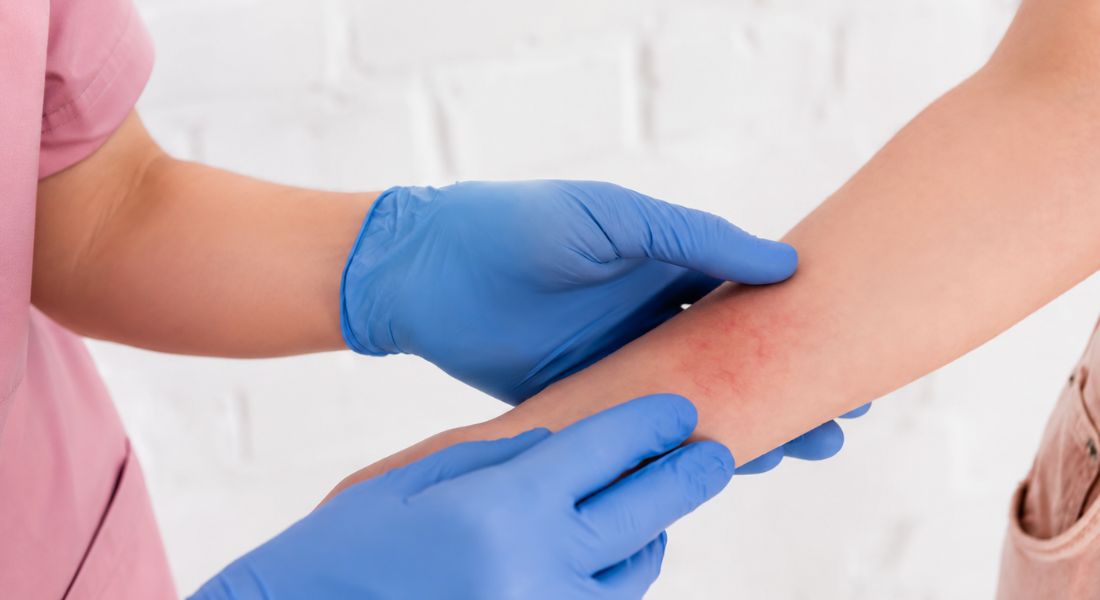
If you live with eczema, you have far more treatment options available today than there were a few decades ago. Your care may include moisturisers, anti-inflammatory creams, phototherapy, tablets or targeted injectable medicines, depending on your symptoms and needs.
These advances developed gradually as doctors learnt more about your skin barrier, inflammation, immune system and the signals behind itching. Older treatments such as emollients and topical corticosteroids remain important, while newer options give your dermatologist more ways to personalise your care when standard treatments are not enough.
Clinical Note: This Article Focuses on Atopic Eczema
Eczema is an umbrella term that includes several inflammatory skin conditions. This article focuses mainly on atopic eczema, also called atopic dermatitis, because the biologic medicines and JAK inhibitors discussed later are used and recommended for atopic dermatitis rather than for eczema as a broad group of conditions. Treatment for other forms of eczema, such as allergic contact dermatitis, may follow a different approach.
Early Eczema Care Focused on Protecting the Skin
Long before doctors understood the immune pathways involved in eczema, they recognised that dry, damaged skin benefited from protection. Ointments, oils and moisturising preparations were used to soften affected skin, reduce cracking and provide a protective layer.
Today, emollients remain an important part of eczema care, even when stronger treatments are needed. You may use different formulations depending on how dry your skin is and where you need to apply them, with ointments often suiting very dry areas and lighter creams being more practical during the day.
Understanding the Skin Barrier Changed Everyday Treatment
One major advance in eczema care was recognising that eczema is not simply a surface rash, but also involves problems with your skin barrier. When this barrier is weakened, your skin can lose moisture more easily and become more vulnerable to irritants, allergens and microbes.
This changed how moisturisers and everyday skin care were understood, establishing regular barrier care as an important part of eczema management. Gentle washing, suitable emollients and avoiding unnecessary irritation remain essential alongside treatments that control inflammation and, when needed, targeted medicines.
The 1950s Brought the Topical Corticosteroid Revolution
A major turning point came in the early 1950s with the introduction of topical corticosteroids. Hydrocortisone provided doctors with an effective topical treatment for reducing inflammation in eczema and other inflammatory skin conditions.
Different strengths and formulations were later developed, allowing your dermatologist to match treatment more closely to your eczema and the area affected. When you use topical corticosteroids correctly and follow professional advice, they remain an important part of eczema care today.
Treatment Became More Structured Rather Than Simply Stronger
Eczema treatment became more structured as doctors learned to manage inflammation rather than simply respond when your skin became severely irritated. Your dermatologist can choose different corticosteroid strengths for different areas of your body. Sensitive areas such as your face and skin folds may need different strengths or formulations from thicker skin on areas such as your hands or feet.
Clearer guidance on how much treatment to use and how long to continue also helped improve eczema control. The aim is now to settle inflammation, protect your skin barrier and respond early to warning signs rather than stopping treatment too soon and allowing another flare to develop.
Infection Became an Important Part of Eczema Management
As doctors learned more about eczema, they also recognised the importance of skin infections. Scratching and a damaged skin barrier can make it easier for bacteria to enter, while some people can develop infections such as eczema herpeticum.
This means your worsening eczema is not always simply another flare, and antibiotics are not automatically needed for every weeping or crusted patch. If you develop rapidly worsening painful eczema, clusters of similar blisters or punched-out sores, fever or significant illness, seek urgent medical assessment, as these features can occur with eczema herpeticum and early antiviral treatment may be needed.
Phototherapy Created an Option Beyond Creams
Phototherapy gave you another option when eczema affected larger areas or did not respond well enough to topical treatments. It uses carefully controlled ultraviolet light, often narrowband UVB, to reduce inflammation and change immune activity within your skin.
You may need regular appointments at a specialist dermatology unit, and phototherapy is not suitable for everyone. Your dermatologist will consider factors such as your medical history, treatment needs and cumulative ultraviolet exposure before recommending it.
Ciclosporin Changed the Treatment of Severe Eczema
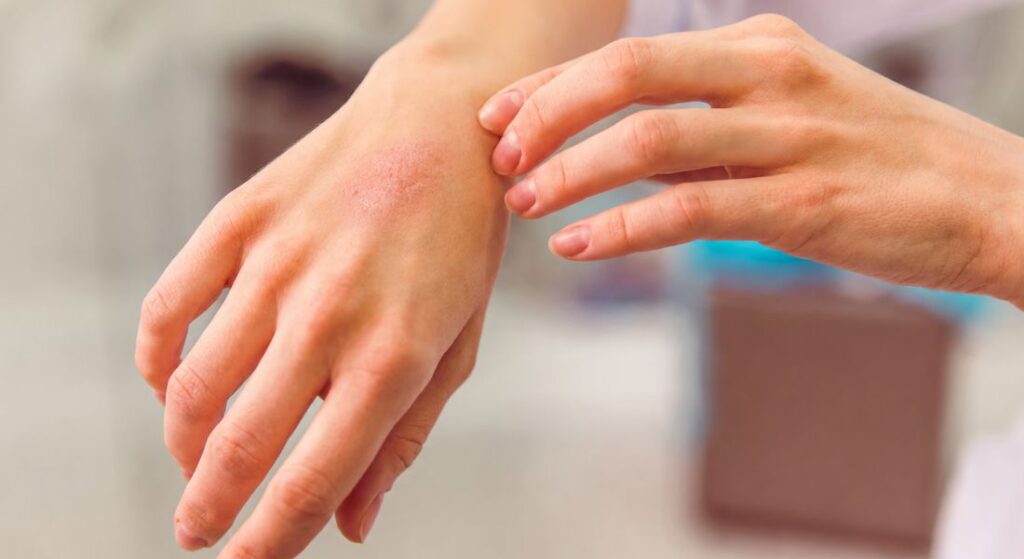
For severe eczema, systemic medicines such as ciclosporin provided an important option when creams were not enough. Ciclosporin can suppress immune activity throughout your body and may bring widespread inflammation under control relatively quickly.
Ciclosporin and other traditional systemic immunosuppressants require careful patient selection and monitoring because they can affect organs or immune function beyond the skin. Other traditional systemic medicines, including methotrexate, azathioprine and mycophenolate mofetil, may also be used in selected patients under specialist supervision; some of these uses are off-label for atopic dermatitis in the UK.
Topical Calcineurin Inhibitors Offered a Steroid-Sparing Option
The introduction of topical calcineurin inhibitors, including tacrolimus ointment and pimecrolimus cream, provided a non-steroid anti-inflammatory option for selected patients. They can be particularly useful on sensitive areas such as your face and skin folds, where repeated steroid use may need careful consideration.
These treatments work differently from topical steroids and do not cause steroid-related skin thinning. You may experience temporary warmth, burning or stinging when you first start using them, but your dermatologist can advise whether they are suitable for your eczema. In UK guidance, they are generally used as second-line treatments in appropriate patients rather than as routine first-line alternatives to topical corticosteroids.
Doctors Began Treating Eczema Between Flares
For many years, eczema treatment focused mainly on managing flares after they appeared. Research later supported a more proactive approach, where you may use intermittent anti-inflammatory treatment on areas that repeatedly cause problems, even after your skin has improved.
This approach aims to reduce how often your eczema flares rather than simply treating each episode as it happens. Your maintenance plan will depend on the severity and location of your eczema, so your dermatologist can advise you on when and how to use proactive treatment.
Quality of Life Became Part of the Treatment Decision
Modern eczema care recognises that the severity of your condition cannot always be judged by how your skin looks. Itching can disturb your sleep, eczema affecting your hands can affect your work, and facial eczema may influence your confidence and emotional wellbeing.
Your symptoms and quality of life are now considered alongside visible inflammation when assessing your treatment. A treatment that improves your skin but leaves you struggling with itching or poor sleep may not be providing enough control for you.
Selected Milestones in Modern Atopic Eczema Treatment
| Year/period | Milestone |
| 1952 | Topical hydrocortisone helped establish topical corticosteroids as a major treatment for inflammatory skin disease. |
| 2004 | NICE published guidance on the use of topical tacrolimus and pimecrolimus for atopic eczema. |
| 2018 | NICE recommended dupilumab for eligible adults with moderate-to-severe atopic dermatitis, marking a major UK milestone for targeted biologic treatment. |
| 2021 | Baricitinib became a NICE-recommended oral JAK inhibitor option for eligible adults with moderate-to-severe atopic dermatitis. |
| 2022 | NICE recommended abrocitinib and upadacitinib for eligible adults and young people aged 12 years and over, and tralokinumab for eligible adults. |
| 2023 | The MHRA introduced class-wide risk-minimisation measures for JAK inhibitors used for chronic inflammatory conditions, reflecting concerns about serious infections, cardiovascular events, malignancy, venous thromboembolism and mortality in people with particular risk factors. |
| 2024 | Lebrikizumab became a NICE-recommended biologic option for eligible people aged 12 years and over who weigh at least 40 kg. |
| 2025 | NICE recommended nemolizumab, used alongside topical corticosteroids or calcineurin inhibitors, or both, for eligible people aged 12 years and over who weigh at least 30 kg and have moderate-to-severe atopic dermatitis suitable for systemic treatment. |
Measuring Eczema Severity Became More Systematic
Modern eczema care now uses structured tools to assess how severe your condition is and whether your treatment is working. Measures such as EASI look at visible eczema, while patient-reported tools help capture your symptoms and how they affect your daily life.
These scores are useful, but they do not tell the whole story. Your itching, sleep, infections, treatment burden and the effect of eczema on your work, education or relationships can also influence how seriously your condition affects you.
IL-13 Treatments Expanded Biologic Options

After dupilumab, newer biologic treatments began focusing more specifically on interleukin-13 (IL-13). Medicines such as tralokinumab and lebrikizumab target this pathway and can help improve moderate-to-severe atopic dermatitis when they are suitable for you.
Having more than one targeted biologic option gives your dermatologist greater flexibility when choosing treatment for you. Your previous treatment response, medical history, preferences and individual risks can all help determine which option may be most suitable for you. Eligibility differs according to age, previous treatment and individual clinical circumstances.
Dupilumab Marked the Beginning of Targeted Biologic Treatment
The arrival of dupilumab was a major milestone in modern eczema treatment because it targets specific inflammatory pathways rather than broadly suppressing your immune system. By blocking signalling involving interleukin-4 and interleukin-13, it can help improve eczema severity, itching and quality of life in people with moderate-to-severe atopic dermatitis.
Its licensed use has since expanded to younger age groups, although suitability and access depend on the child’s age, disease severity and current treatment guidance. Although dupilumab can cause side effects, including conjunctivitis and other eye symptoms, its introduction demonstrated that targeting specific cytokine pathways could provide an effective systemic treatment option for appropriately selected people with atopic dermatitis.
Oral JAK Inhibitors Added Another Targeted Treatment Approach
Biologic injections were not the only major change in eczema treatment, as oral JAK inhibitors introduced another targeted option. Medicines such as baricitinib, abrocitinib and upadacitinib act on Janus kinase signalling pathways and can reduce eczema severity and itching in appropriately selected patients.
JAK inhibitors require careful assessment because their safety profile differs from that of biologic medicines. The MHRA applies class-wide risk-minimisation measures because of concerns including serious infections, major cardiovascular events, malignancy, venous thromboembolism and mortality. JAK inhibitors should be avoided unless there are no suitable treatment alternatives in people aged 65 years or older, current or past long-time smokers, or people with other cardiovascular-disease or malignancy risk factors. Additional caution is advised where other venous-thromboembolism risk factors are present, so your dermatologist will consider your individual risks and alternative treatment options before recommending one.
Nemolizumab Made Itch Signalling a Direct Treatment Target
For years, itching was often treated as a result of inflamed skin, but research now recognises it as a major part of atopic dermatitis. The itch-scratch cycle can keep your symptoms going, as repeated scratching can damage your skin barrier and increase inflammation.
Nemolizumab marked another step in targeted treatment by blocking interleukin-31 receptor alpha (IL-31RA), a pathway involved in itch signalling. NICE recommended nemolizumab in 2025, alongside topical corticosteroids or calcineurin inhibitors, or both, for eligible people aged 12 years and over who weigh at least 30 kg and have moderate-to-severe atopic dermatitis suitable for systemic treatment. This reflects the growing recognition that reducing itch is an important treatment goal alongside improving visible inflammation.
UK Guidance Note: Newer Treatments Are Not First-Line for Everyone
The availability of more targeted medicines does not mean that everyone with eczema needs biologic or JAK-inhibitor treatment. In UK practice, these medicines are generally considered for moderate-to-severe atopic dermatitis when systemic treatment is appropriate and specific eligibility criteria are met. The exact criteria differ between medicines and may include age, previous systemic treatments and response to earlier therapy.
Treatment therefore remains stepwise and individualised. Emollients, topical anti-inflammatory treatment and, in selected cases, phototherapy or traditional systemic treatment continue to have important roles even though newer targeted medicines are now available.
Eczema Care Has Become More Personalised
The growing range of eczema treatments means your dermatologist can now consider more than just how much eczema you have. Your symptoms, affected areas, age, medical circumstances and previous treatment response can all influence which option is most suitable for you.
Treatment still follows a step-by-step approach, but it is now more personalised to your needs. If your eczema continues despite appropriate everyday care, your dermatologist can help you understand which treatments may be most appropriate for the severity and pattern of your condition.
Myth vs Fact
| Myth | Fact |
| New biologic medicines have replaced moisturisers and topical treatments. | No. Emollients and topical anti-inflammatory treatments remain important, even when systemic or biologic treatment is needed. |
| The strongest topical steroid is always the most effective choice. | Treatment strength depends on the severity, body area, age and individual circumstances. Stronger treatment is not automatically more appropriate. |
| Every weeping or crusted eczema flare needs antibiotics. | Not necessarily. Bacterial infection needs clinical assessment, and antibiotics are not routinely required for every eczema flare. |
| Biologics and traditional immunosuppressants work in exactly the same way. | Biologics target specific inflammatory pathways, while traditional systemic immunosuppressants act more broadly on immune activity. |
| Because JAK inhibitors are targeted medicines, they are suitable for everyone. | No. They have important safety considerations, and individual cardiovascular, malignancy, infection and blood-clot risk factors need to be assessed. |
| Nemolizumab is still only an exbperimental eczema treatment. | No. NICE recommended nemolizumab in 2025 for eligible people aged 12 years and over who weigh at least 30 kg and have moderate-to-severe atopic dermatitis suitable for systemic treatment. |
Where Eczema Treatment Is Heading Next

Eczema treatment is still evolving, with researchers studying new antibodies, small-molecule medicines and treatments that target specific inflammatory pathways. You may also see more focus on long-term treatment, helping doctors understand the longer-term effectiveness and safety of newer medicines over several years.
Another important goal is finding better ways to predict which treatment will work best for you. Researchers are investigating whether biomarkers, genetic information or other disease characteristics could eventually help predict treatment response. These approaches remain an evolving area of research rather than routine tools for choosing eczema treatment.
The treatment landscape is continuing to change, with additional targeted therapies still being studied and assessed. New treatments should only be considered established NHS options once the relevant licensing, NICE recommendations and eligibility criteria have been confirmed.
Key Takeaways
- Eczema treatment has progressed from barrier protection and topical medicines to phototherapy, systemic immunosuppressants, biologics and targeted oral therapies.
- Topical corticosteroids, introduced into dermatological practice in the early 1950s, remain an important treatment today.
- Modern eczema management focuses not only on visible inflammation but also on itching, sleep, quality of life and prevention of recurrent flares.
- Biologic medicines such as dupilumab, tralokinumab and lebrikizumab target specific inflammatory pathways involved in atopic dermatitis.
- Oral JAK inhibitors provide another targeted systemic option but require careful assessment because of important safety considerations.
- Nemolizumab became a NICE-recommended option in 2025 for eligible people aged 12 years and over who weigh at least 30 kg, reflecting the growing focus on pathways involved in itch.
- Newer medicines have expanded treatment choices rather than replacing established skin care and topical treatment.
FAQs
1. How has eczema treatment changed over time?
Eczema treatment has progressed from basic moisturising preparations and topical anti-inflammatory treatments to phototherapy, systemic immunosuppressants, biologic medicines and targeted oral therapies. Modern care can be tailored more closely to your symptoms, disease severity and treatment history.
2. When were topical corticosteroids first introduced for eczema?
Topical corticosteroids entered dermatological treatment in the early 1950s, with hydrocortisone becoming an important anti-inflammatory treatment for eczema and other inflammatory skin conditions.
3. Are emollients still important for eczema today?
Yes. Emollients remain a fundamental part of eczema care because they help moisturise dry skin and support the skin barrier. You may continue using them even when you need prescription anti-inflammatory or systemic treatment.
4. What role does phototherapy play in eczema treatment?
Phototherapy uses carefully controlled ultraviolet light to reduce inflammation and immune activity in the skin. Narrowband UVB is one option that may be considered when eczema is widespread or has not responded adequately to topical treatments.
5. What treatments were used for severe eczema before biologics?
Severe eczema was traditionally treated with systemic immunosuppressive medicines such as ciclosporin, methotrexate, azathioprine and mycophenolate mofetil in selected patients. These treatments can be effective but may affect the immune system more broadly and require appropriate monitoring.
6. Why was dupilumab such an important milestone in eczema treatment?
Dupilumab marked a major move towards targeted systemic treatment because it blocks signalling involving IL-4 and IL-13 rather than broadly suppressing immune activity.
7. What are JAK inhibitors, and how do they treat eczema?
JAK inhibitors are targeted oral medicines that interfere with signalling pathways involved in inflammation. Medicines such as baricitinib, abrocitinib and upadacitinib may be used for moderate-to-severe atopic dermatitis in appropriately selected patients, but important infection, cardiovascular, malignancy and blood-clot risk factors need to be considered before treatment.
8. Has eczema treatment become more focused on itching?
Yes. Itch is now recognised as an important treatment target in its own right. Nemolizumab targets signalling involving the IL-31 pathway and was recommended by NICE in 2025 for eligible people aged 12 years and over who weigh at least 30 kg and have moderate-to-severe atopic dermatitis suitable for systemic treatment.
9. Is modern eczema treatment personalised?
Increasingly, yes. Your dermatologist may consider the severity and location of your eczema, itching, sleep disruption, previous treatments, age, medical history and the effect of the condition on your everyday life when selecting treatment.
10. What could be the next major milestone in eczema treatment?
Research is exploring additional targeted medicines, longer-term safety and effectiveness, and whether biomarkers or other disease characteristics could eventually help guide treatment selection. These approaches remain areas of research rather than routine tools for choosing eczema treatment.
Final Thoughts: The Continuing Evolution of Eczema Treatment
Eczema treatment has changed dramatically over the past century, moving from basic skin protection and topical medicines to phototherapy, systemic treatments, biologics and targeted therapies. At the same time, established treatments such as emollients and topical corticosteroids remain essential, while newer options provide more targeted ways to manage inflammation, itching and severe disease.
If you’re looking for eczema treatment in London, you can contact us at London Dermatology Centre to book a consultation with one of our specialists. With treatment increasingly tailored to your symptoms, severity, medical history and everyday needs, you can work with a specialist to find an approach that is appropriate for your individual eczema.
References:
- Flohr, C. (2023) ‘How we treat atopic dermatitis now and how that will change over the next 5 years’, British Journal of Dermatology, 188(6), pp. 718–725. Available at: https://academic.oup.com/bjd/article/188/6/718/6880686
- Das, A. and Panda, S. (2017) ‘Use of topical corticosteroids in dermatology: an evidence-based approach’, Indian Journal of Dermatology, 62(3), pp. 237–250. Available at: https://pmc.ncbi.nlm.nih.gov/articles/PMC5448257/
- Chu, A.W.L., Wong, M.M., Rayner, D.G. et al. (2023) ‘Systemic treatments for atopic dermatitis (eczema): systematic review and network meta-analysis of randomized trials’, Journal of Allergy and Clinical Immunology, 152(6), pp. 1470–1492. Available at: https://www.sciencedirect.com/science/article/pii/S0091674923011120
- Simpson, E.L., Bieber, T., Guttman-Yassky, E. et al. (2016) ‘Two phase 3 trials of dupilumab versus placebo in atopic dermatitis’, New England Journal of Medicine, 375(24), pp. 2335–2348. Available at: https://pubmed.ncbi.nlm.nih.gov/27690741/
- Biliński, K. et al. (2025) ‘Anti-inflammatory therapies for atopic dermatitis: a new era in targeted treatment’, Journal of Clinical Medicine, 14(14), article 5053. Available at: https://www.mdpi.com/2077-0383/14/14/5053