



Global dermatology conferences are key platforms where experts share the latest research and clinical advances in skin health. You would have heard leading dermatologists, researchers, and aesthetic practitioners coming together at these events to discuss how treatment approaches for acne scarring are continuing to evolve.
At these international meetings, much of the focus is on improving both treatment outcomes and your long-term satisfaction with results. You may find it helpful to understand that acne scarring can affect your skin’s texture, tone, and overall appearance, which is why it remains such an important area of ongoing research and innovation.
Recent presentations have highlighted progress in laser technology, regenerative medicine, combination approaches, and more personalised treatment planning. You are likely to see these developments allowing clinicians to tailor treatments more closely to your specific skin type and the nature of your scarring, rather than relying on a standardised approach.
If you are dealing with acne scarring, these conference insights show how treatment options are steadily improving. You are likely to benefit from more refined, targeted, and individualised approaches in modern scar management going forward.
Acne Scarring as a Priority in Dermatology Research
Acne scarring is consistently prioritised at global dermatology conferences because of how common it is and the lasting impact it can have on you long after active acne has settled. You would have heard experts highlighting that scarring is not just a physical concern, but something that can continue to affect your skin confidence over time.
Many discussions focus on how scars can influence your self-esteem and overall quality of life. You may find it reassuring that this is one of the main reasons research into acne scarring treatments has increased significantly, with a stronger focus on improving both physical results and your emotional wellbeing.
Dermatology meetings regularly emphasise the need for better long-term outcomes through more advanced treatments and personalised care. You are likely to see continued progress in this area, with a growing focus on tailoring approaches specifically to your skin type and the nature of your scarring.
Understanding Different Types of Acne Scars
Conference presentations frequently emphasise that acne scarring is not a single condition. You would have heard experts explaining that there are different types of scars, including atrophic, hypertrophic, and rolling scars, and each one can affect your skin in a different way.
Each scar type requires a different treatment approach. You may find it useful to know that identifying exactly what type of scarring you have is essential, because it helps your clinician choose the most appropriate treatment for your skin rather than using a generalised method.
Accurate diagnosis is a key focus in improving treatment outcomes. You are likely to see better and more predictable results when your scarring is carefully assessed and your treatment plan is tailored specifically to your individual scar pattern.
The Role of Skin Healing in Scar Formation
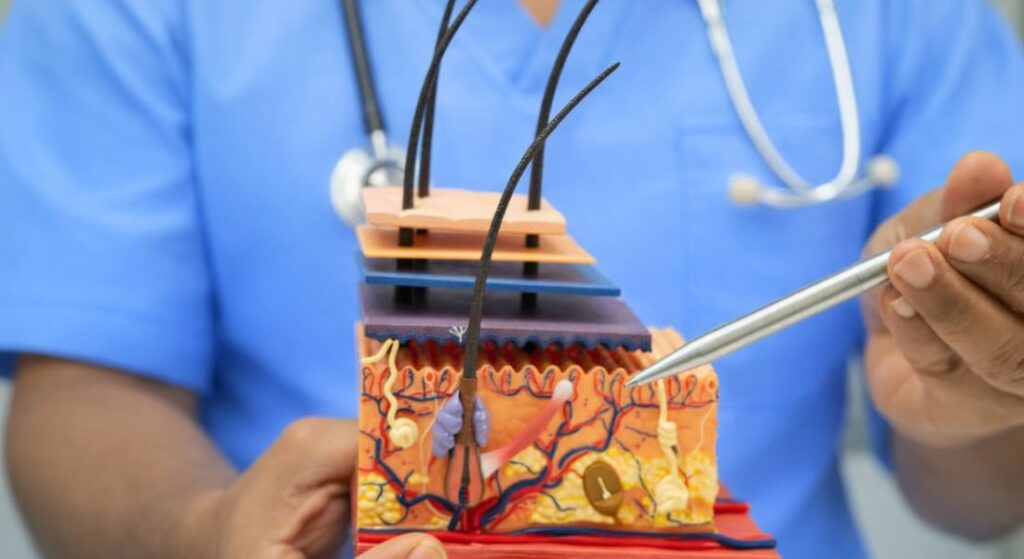
Researchers at dermatology events often explore how your skin’s healing process directly influences the development of acne scarring. You would have heard experts explaining that when inflammation occurs during acne, it can extend deeper into your skin layers and disrupt normal tissue repair.
As your skin heals, the body produces collagen to repair the damage, but this process is not always perfectly balanced. You may find it helpful to understand that uneven collagen production can lead to either loss of tissue or excess tissue formation, both of which contribute to the visible scars you see on the surface.
Understanding this healing process is essential for guiding future treatment innovations. You are likely to benefit from this knowledge because it helps clinicians develop more targeted treatments that aim to improve how your skin repairs itself and reduce the long-term appearance of scarring.
Microneedling and Collagen Induction Therapies
Microneedling is a popular topic at dermatology conferences. You would have heard experts explaining that it works by creating controlled micro-injuries in your skin, which triggers a natural healing response.
This process stimulates collagen production and supports gradual skin remodelling, helping to improve texture over time. You may find it useful to know that it is often used for mild to moderate acne scarring, where your skin still has good capacity to respond to collagen stimulation.
Combination approaches involving microneedling are increasingly discussed. You are likely to see it used alongside other treatments to enhance results and provide a more comprehensive approach to improving your skin’s overall appearance.
Combination Treatments for Better Results
Experts at global dermatology events frequently highlight the benefits of combining treatments. You would have heard discussions explaining that acne scarring often needs more than one approach if you want the best possible improvement in your skin.
Laser therapy, microneedling, and chemical peels are often used together, depending on your individual skin type and the nature of your scars. You may find it helpful to know that each treatment works at a different depth, so combining them allows your clinician to target multiple layers of your skin more effectively.
Combination therapy is becoming a standard part of modern scar management. You are likely to see more personalised treatment plans being used, where different techniques are carefully combined to improve your results in a more balanced and structured way.
Laser Technology Advancements for Acne Scars
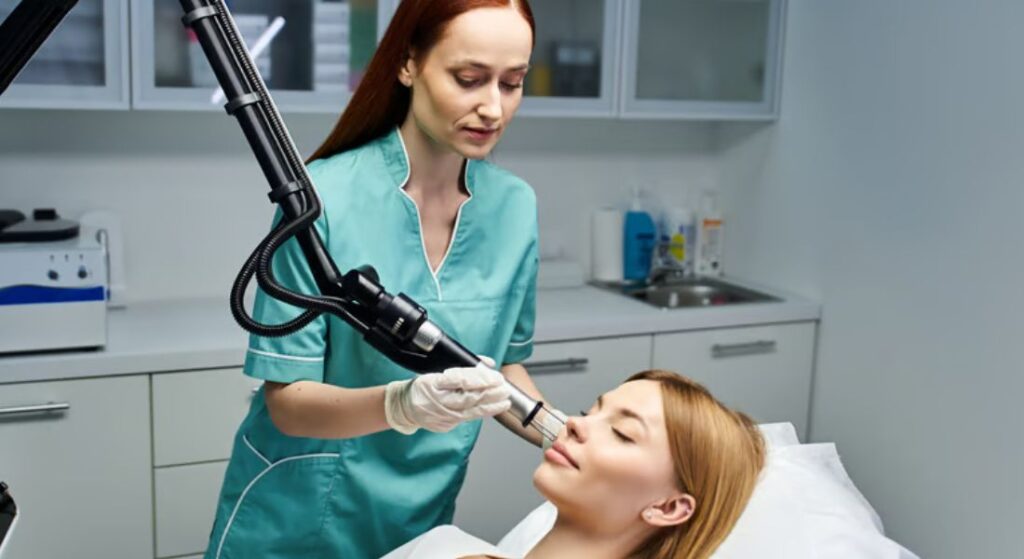
At AMWC, you will often hear that laser technology remains one of the most widely discussed and effective approaches for treating acne scarring. You will notice a strong focus on how modern systems are becoming more precise, safer, and better tailored to your individual skin needs.
- Improved precision in modern laser systems: You will hear experts explain that newer laser devices allow for much more controlled energy delivery. This means treatment can be more accurately targeted to your acne scars while minimising impact on surrounding healthy skin.
- Fractional lasers are widely used: Fractional laser technology is frequently highlighted at conferences. This approach treats only a fraction of the skin at a time, which helps stimulate natural healing while reducing downtime for you.
- Skin resurfacing for texture improvement: You will often see resurfacing techniques discussed as a way to improve uneven skin texture caused by acne scarring. These treatments work by encouraging your skin to renew itself gradually over time.
- Collagen stimulation plays a key role: Many laser treatments work by triggering your body’s natural collagen production. As new collagen forms, your skin may become smoother, firmer, and more even in appearance.
- Ongoing improvements in safety and outcomes: Conference speakers frequently highlight that advances in laser technology are not only improving results but also enhancing safety. Modern devices are designed to reduce the risk of complications while delivering more consistent outcomes for you.
Overall, the discussions at AMWC show that laser technology continues to evolve rapidly in the treatment of acne scars. With improved precision, better safety profiles, and enhanced collagen stimulation, you can expect more refined and effective results over time.
Subcision Techniques for Deep Scars
Subcision is frequently presented at dermatology conferences as an effective technique for treating deeper acne scars. You would have heard experts explaining that it works by releasing the fibrotic bands underneath your skin that can pull certain scars downward.
By breaking these tight bands, the skin is able to lift and gradually appear smoother over time. You may find it useful to know that this approach is particularly effective for depressed or “tethered” scars, where the surface is being held down by deeper structural connections.
It is often combined with other treatments to enhance overall results. You are likely to see subcision used as part of a broader, personalised plan to improve rolling scars and achieve a more even skin texture in a gradual and natural way.
Dermal Fillers for Volume Restoration
Dermal fillers are sometimes used to improve the appearance of atrophic acne scars. You would have heard experts explaining that they work by restoring lost volume beneath your skin, helping to lift areas where scarring has created depressions.
One of the key points discussed at conferences is that fillers can provide immediate visible improvement, which you may notice straight after treatment. However, you may also find it important to understand that these results are temporary and will gradually wear off over time.
Because of this, fillers are often used as part of a broader treatment plan rather than a standalone solution. You are likely to see them combined with other techniques to help achieve more balanced, longer-lasting improvements in your skin’s texture and overall appearance.
Chemical Peels in Scar Improvement
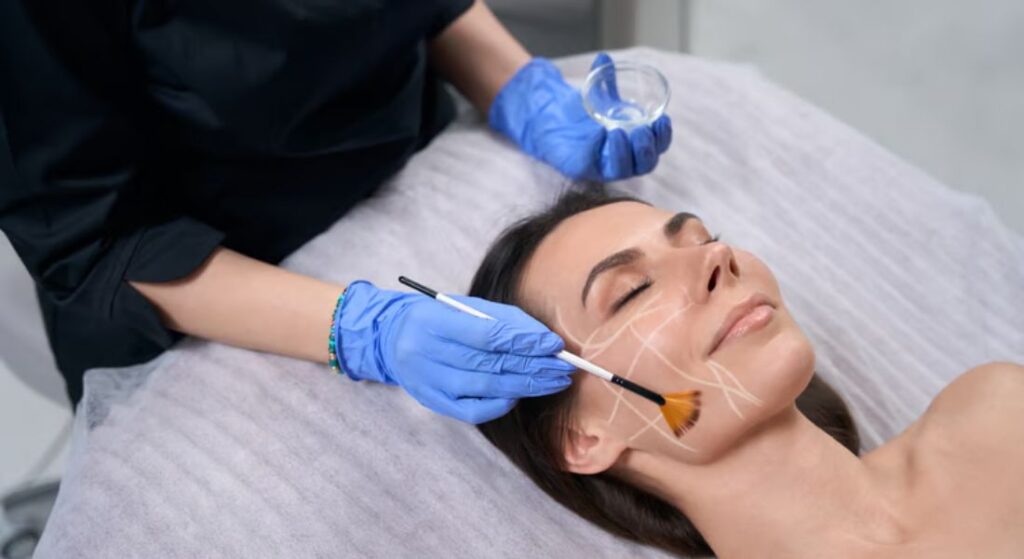
Chemical peels are widely discussed as part of acne scar treatment strategies at dermatology conferences. You would have heard experts explaining that they work by gently exfoliating the damaged outer layers of your skin, encouraging natural regeneration underneath.
This controlled removal of skin layers helps to stimulate renewal and can gradually improve both texture and tone. You may find it useful to know that peel strength and formulation are carefully selected based on your skin type and the severity of your scarring, which plays a big role in how effective the treatment is for you.
Superficial and medium-depth peels are commonly used in practice. You are likely to see these treatments incorporated into personalised plans aimed at improving your skin’s overall smoothness and long-term appearance in a gradual and controlled way.
Energy-Based Devices in Modern Scar Treatment
At AMWC, you will often hear growing interest in energy-based devices such as radiofrequency and ultrasound systems for treating acne scars. You will notice that these technologies are being discussed more frequently because they offer a way to target deeper layers of your skin, where collagen remodelling takes place.
- Deeper collagen stimulation: You will hear experts explain that radiofrequency and ultrasound devices work below the surface of your skin. This deeper action helps stimulate collagen production more effectively, which can improve the appearance of acne scarring over time.
- Improving skin structure and firmness: These treatments are designed to support remodelling of your skin’s underlying structure. As new collagen forms, you may notice gradual improvements in firmness, smoothness, and overall skin texture.
- Often combined with other treatments: You will frequently hear that energy-based devices are rarely used alone. Instead, they are often combined with treatments such as lasers or microneedling to enhance your overall results and target scars from multiple angles.
- Focus on safety and precision: Conference discussions consistently highlight the importance of controlled energy delivery. Modern devices are designed to deliver precise treatment while minimising the risk of damage to surrounding tissue, helping to keep your treatment as safe as possible.
- Rapid technological development: You will often hear that this area of dermatology is evolving quickly. Newer devices and improved protocols are continually being introduced, offering more refined and predictable outcomes for you.
Overall, the discussions at AMWC show that energy-based devices are becoming an important part of modern acne scar treatment. With deeper collagen stimulation, improved precision, and combination approaches, you can expect steadily improving results as technology continues to advance.
Regenerative Medicine and Scar Repair
Regenerative medicine is an emerging and increasingly important area in acne scar treatment research. You would have heard experts explaining that it focuses on supporting your skin’s natural healing processes, rather than simply treating the surface of the scar.
Platelet-rich plasma (PRP) is often discussed in this context. You may find it interesting that it uses components from your own blood to potentially encourage collagen production and support tissue repair, which can gradually improve the appearance of scarring over time.
Researchers are still exploring its long-term effectiveness. You are likely to see ongoing studies and conference discussions continuing to evaluate how well regenerative approaches like PRP can be integrated into broader, personalised acne scar treatment plans.
Stem Cell Research in Skin Regeneration
Stem cell therapy is an emerging area of interest at dermatology conferences. You would have heard scientists explaining that research is currently focused on how stem cells might support your skin’s natural regeneration and repair processes at a deeper, cellular level.
Although this approach is still largely experimental, early findings suggest there could be promising potential for improving how your skin heals after acne scarring. You may find it interesting that the aim is not just surface-level improvement, but enhancing the quality of tissue repair itself.
However, further studies are needed before it becomes widely used in clinical practice. You are likely to see continued research in this area, as experts work to better understand its safety, effectiveness, and how it might eventually fit into future acne scar treatments.
Personalised Treatment Planning for Scarring
Personalisation is becoming increasingly important in acne scar management. You would have heard experts at conferences highlighting that no two people present with the exact same scar pattern, skin type, or healing response, which is why a tailored approach is so important for you.
Treatments are increasingly being selected based on your individual scar type, skin sensitivity, and overall severity. You may find it useful to know that this helps improve both safety and the quality of your results, as your treatment plan is designed specifically around your skin rather than a generalised protocol.
Personalised care is now considered essential in dermatology. You are likely to see continued emphasis on customised treatment plans, where multiple techniques are carefully combined to suit your unique needs and achieve more balanced, natural-looking improvements over time.
Importance of Skin Type Assessment
Skin type plays a major role in determining which acne scar treatments are most suitable for you. You would have heard experts at conferences explaining that different skin tones can respond differently to certain procedures, which makes careful assessment an essential first step in planning your care.
A key focus of these discussions is reducing the risk of pigmentation changes after treatment. You may find it useful to know that this is why clinicians pay close attention to your skin type, sensitivity, and healing tendency before recommending specific procedures.
Careful assessment helps guide treatment choice more effectively. You are likely to benefit from this approach as it supports safer, more predictable outcomes and ensures your treatment plan is tailored to both your skin’s characteristics and your individual goals.
Managing Post-Inflammatory Hyperpigmentation
At AMWC, you will often hear that post-inflammatory hyperpigmentation (PIH) is a very common concern in patients with acne scarring. You will notice that it frequently appears after acne lesions have healed, leaving behind darkened patches that can affect your overall skin tone and texture.
- PIH often follows acne inflammation: You will hear experts explain that PIH develops as a response to inflammation in your skin. Even after acne itself settles, pigment changes can remain and take time to fade.
- Treating pigmentation alongside scarring is important: Conference discussions often highlight that addressing acne scars alone is not always enough. You may also need to manage pigmentation at the same time to achieve a more even and natural-looking skin appearance.
- Combination treatment approaches are commonly used: You will often hear that clinicians use a combination of treatments to target both scarring and pigmentation. This may include lasers, topical agents, and other skin-rejuvenating therapies depending on your skin type and needs.
- Improving overall skin tone and texture together: The aim is not just to treat individual scars, but to improve your overall skin quality. By addressing both texture and colour irregularities, your skin can appear more balanced and refined.
- Careful treatment planning is essential: You will frequently hear that managing PIH requires careful planning, especially in patients with darker skin tones who may be more prone to pigmentation changes. A tailored approach helps reduce risks and improve outcomes for you.
Overall, the discussions at AMWC show that managing post-inflammatory hyperpigmentation is a key part of acne scar treatment. By addressing both pigmentation and scarring together, you can achieve a more even, smoother, and healthier-looking complexion over time.
Psychological Impact of Acne Scarring
Acne scarring can have a significant emotional impact on you, not just a physical one. You would have heard conference speakers explaining that many people experience reduced confidence and self-esteem long after their active acne has settled.
Because of this, psychological support is increasingly being recognised as an important part of acne scar management. You may find it reassuring that modern dermatology takes a more holistic approach, meaning your emotional wellbeing is considered alongside your physical treatment.
Improving your skin’s appearance can also have a positive effect on your overall quality of life. You are likely to feel more confident and comfortable in yourself as treatment progress improves both the texture of your skin and your relationship with how it looks.
Advances in Fractional Laser Technology
Fractional lasers are widely used in acne scar treatment. You would have heard experts at conferences explaining that they work by creating controlled micro-injuries in your skin, which trigger the body’s natural healing response.
This process stimulates collagen production and supports gradual skin remodelling, helping to improve both texture and overall smoothness. You may find it useful to know that recent advancements have focused on increasing precision while also reducing recovery time, making the treatment more comfortable and efficient for you.
Conference presentations often highlight how improved laser settings and delivery techniques are helping clinicians achieve more predictable outcomes. You are likely to benefit from these ongoing advancements as fractional laser technology continues to evolve and deliver better, more refined results over time.
Safety Considerations in Scar Treatments
Safety is a key focus at dermatology conferences. You would have heard experts emphasising that every acne scar treatment needs careful risk assessment before anything begins, so your skin type, medical history, and scar depth are properly evaluated.
These factors are important because they help your practitioner choose the most suitable approach for you and reduce the likelihood of unwanted side effects or complications. You may find it reassuring that this step is never rushed, as proper planning plays a major role in achieving both safe and effective results.
Safety remains a central priority in all treatments. You are likely to benefit from this careful, structured approach, where your treatment is tailored not only for results but also to ensure your skin is protected throughout the entire process.
Long-Term Outcomes in Acne Scar Treatment
At AMWC, you will often hear that long-term outcomes are becoming just as important as immediate results when it comes to acne scar treatment. You will notice that experts are increasingly interested in how your skin continues to respond months and even years after treatment, rather than focusing only on short-term improvement.
- Long-term results are closely monitored: You will hear researchers explain that follow-up data is essential. It helps show how your skin continues to improve over time and whether results remain stable or continue to evolve.
- Gradual improvement is often the goal: Rather than expecting instant change, you will often hear that sustained, progressive improvement is a more realistic and desirable outcome for you. Many treatments continue working beneath the surface long after your procedure.
- Follow-up studies refine treatment approaches: Experts frequently rely on long-term studies to understand what works best in real patients. This information helps improve future treatment protocols and makes outcomes more predictable for you.
- Better understanding of treatment durability: You will often hear discussions about how long results last and which treatments offer the most durable improvements. This helps guide more informed treatment planning for your skin.
- Improved long-term care strategies: Conference speakers emphasise that long-term data supports better overall care. By understanding how your skin behaves over time, practitioners can adjust treatment plans to maintain and enhance your results.
Overall, the discussions at AMWC highlight that long-term outcomes are a key part of modern acne scar treatment. By focusing on sustained improvement rather than quick fixes, you can achieve more stable, natural-looking, and lasting enhancements to your skin over time.
Future Directions in Acne Scar Research
Future dermatology research is increasingly focused on improving precision, safety, and skin regeneration. You would have heard experts at conferences explaining that new technologies are continually emerging, all aimed at making acne scar treatment more effective and more predictable for you.
AI, regenerative medicine, and combination therapies are expected to play a much larger role going forward. You may find it interesting that these approaches are being developed to work together, helping clinicians target your scarring more accurately while also supporting your skin’s natural healing response.
Research is clearly moving towards more personalised solutions. You are likely to benefit from this shift, as future treatments become increasingly tailored to your individual skin type, scar pattern, and treatment goals, leading to more refined and natural-looking outcomes over time.
FAQs:
1. Why is acne scarring such an important topic at dermatology conferences?
Acne scarring is widely discussed because it is both a common and emotionally impactful condition. Many patients continue to experience scarring long after acne has cleared, which makes it a long-term treatment priority. Conferences bring experts together to share new research and improve outcomes. This helps drive innovation in both medical and aesthetic dermatology.
2. What are the main types of acne scars discussed in research?
Researchers usually classify acne scars into atrophic, hypertrophic, and rolling scars. Each type forms differently and affects the skin in unique ways. Because of this, treatment approaches must be tailored to the specific scar type. Accurate classification is essential for achieving better clinical results.
3. What are the latest laser treatments for acne scarring?
Laser technology remains one of the most frequently updated areas in acne scar research. Fractional and resurfacing lasers are commonly discussed for their ability to stimulate collagen and improve skin texture. Newer devices aim to improve precision while reducing downtime. These advancements are helping deliver more consistent results.
4. How does microneedling help with acne scars?
Microneedling works by creating controlled micro-injuries in the skin, which triggers the body’s natural healing response. This stimulates collagen production and supports skin remodelling. It is often used for mild to moderate scarring. Many conference studies now explore combining it with other treatments for enhanced results.
5. Why are combination treatments becoming more popular?
Combination treatments are widely discussed because acne scarring often affects multiple skin layers. Using more than one approach such as lasers, microneedling, and chemical peels can improve overall outcomes. This allows practitioners to target different aspects of scarring more effectively. It is now considered a modern standard in care.
6. What is subcision and how does it work?
Subcision is a technique used to treat deeper, tethered acne scars. It involves breaking up fibrous bands beneath the skin that pull scars downward. This helps lift depressed scars and smooth the skin surface. It is often combined with other treatments for better results.
7. How do dermal fillers help with acne scars?
Dermal fillers are used to restore volume in areas affected by atrophic scarring. They can provide immediate improvement by lifting depressed scars. However, results are usually temporary and require maintenance. At conferences, fillers are often discussed as part of a broader treatment plan.
8. What role does regenerative medicine play in acne scar treatment?
Regenerative medicine focuses on stimulating the body’s natural healing processes. Treatments like platelet-rich plasma (PRP) are often discussed in this context. These approaches aim to improve collagen production and tissue repair. Research is ongoing to determine their long-term effectiveness.
9. Why is personalised treatment planning important for acne scars?
No two patients have the same type or severity of scarring, so personalised treatment is essential. Conference experts emphasise tailoring procedures based on scar type, skin tone, and overall skin condition. This helps improve safety and treatment effectiveness. It also leads to more natural-looking results.
10. What is the future of acne scar treatment according to conference research?
The future of acne scar treatment is moving towards more precise, regenerative, and personalised approaches. Advances in lasers, energy-based devices, and AI-driven planning are expected to improve outcomes. Researchers are also exploring stem cell therapies and advanced combination treatments. Overall, the focus is on safer and more effective long-term results.
Final Thoughts: Where Acne Scarring Treatment Is Heading Next
Acne scarring research shared at global dermatology conferences shows just how quickly this field is evolving. You’re now seeing a clear shift towards treatments that don’t just resurface the skin, but also support deeper regeneration, collagen remodelling, and personalised care plans tailored to your specific scar type and skin biology.
What stands out most is how combination approaches are becoming the norm rather than the exception. Whether it’s lasers paired with microneedling, or energy-based devices alongside regenerative therapies like PRP, the goal is increasingly about improving outcomes in a more controlled, predictable way. At the same time, advances in technology and AI are helping clinicians refine planning and reduce variability in results.
If you’re struggling with acne scarring, it’s worth knowing that modern treatment strategies are far more sophisticated than they used to be, and ongoing research continues to improve safety, precision, and long-term effectiveness. If you’re considering acne clinic in London, you can contact us at London Dermatology Centre to book a consultation with one of our specialists.
References:
- Arowojolu, A.O., Gallo, M.F., Lopez, L.M. and Grimes, D.A. (2012) Combined oral contraceptive pills for treatment of acne, Cochrane Database of Systematic Reviews, (7). Available at: https://pubmed.ncbi.nlm.nih.gov/22786490/
- Sivamaruthi, B.S., Kesika, P., Prasanth, M.I., Chaiyasut, C. and Chaiyasut, K. (2020) Novel topical application of a postbiotic, LactoSporin, in mild to moderate acne: a randomized, comparative clinical study to evaluate its efficacy, tolerability and safety, Cosmetics, 7(3), Article 70. Available at: https://www.mdpi.com/2079-9284/7/3/70
- Kwon, H.H., Yoon, J.Y., Hong, J.S., Jung, J.Y., Park, M.S. and Suh, D.H. (2020) Clinical and histological evaluation of acne treatments and skin response, Cosmetics, 7(3), Article 53. Available at: https://www.mdpi.com/2079-9284/7/3/53
- Wang, X., Wu, Y., Zhao, P., Wang, X., Wu, W. and Yang, J. (2024) The causal relationship between serum metabolites and acne vulgaris: a Mendelian randomization study, Scientific Reports, 14, Article 11045. Available at: https://pmc.ncbi.nlm.nih.gov/articles/PMC11093973/
- Lucky, A.W., Henderson, T.A., Olson, W.H., Robisch, D.M., Lebwohl, M. and Swinyer, L.J. (1997) Effectiveness of norgestimate and ethinyl estradiol in treating moderate acne vulgaris, Journal of the American Academy of Dermatology, 37(5), pp. 746–754. Available at: https://pubmed.ncbi.nlm.nih.gov/9366821/