



If you use sunscreen today, you are benefiting from centuries of changing approaches to sun protection and more than a century of scientific research into ultraviolet radiation. Long before SPF numbers appeared on bottles, people relied mainly on shade, clothing and various substances applied to exposed skin.
Modern sunscreen developed as scientists gained a better understanding of ultraviolet radiation and created ingredients that could reduce the amount of damaging UV reaching your skin. Over time, the focus expanded from preventing sunburn to providing protection across both UVA and UVB wavelengths, although sunscreen should still be combined with shade, clothing and other sun-protection measures.
Sun Protection Existed Before Sunscreen
People protected themselves from intense sunlight long before modern dermatology existed, using shade, clothing and substances applied to exposed skin. These early methods were often practical ways to reduce direct sunlight rather than scientifically formulated products designed to filter ultraviolet radiation.
Historical accounts describe plant- and mineral-based preparations used by ancient societies, although their effectiveness and composition varied considerably. These approaches were very different from the tested sunscreen formulations you can buy today, which are designed with specific UV protection in mind.
Understanding Ultraviolet Radiation Changed Everything
Research showed that sunlight contains different types of ultraviolet radiation, including UVA and UVB. These rays affect your skin in different ways and can cause damage with excessive exposure.
- UVB: Is strongly linked to sunburn and skin damage.
- UVA: Penetrates deeper into your skin and contributes to long-term damage.
- Skin damage: Both UVA and UVB can damage your skin over time.
- Skin cancer: Excessive UV exposure can increase your risk of skin cancer.
- Sun protection: Understanding UV radiation helped improve ways to protect your skin.
This research helped scientists develop more targeted approaches to UV protection. It also improved understanding of how sunlight affects your skin over time.
From Experimental UV Absorbers to Early Sunscreens
Attempts to protect your skin with substances that absorbed ultraviolet radiation began before the 1920s. In 1889, Widmark experimented with acidified quinine sulphate, and in 1891 Hammer used quinine in lotions and ointments in what a major historical review describes as the first human sunscreen.
Development continued during the early twentieth century. Eder and Freund introduced Antilux in 1922, while benzyl salicylate was reported as a sunscreen ingredient in 1931. These preparations were still very different from the tested, cosmetically acceptable products you use today, but they marked the transition from traditional sun avoidance towards deliberately formulated UV filters.
Sunbathing Became Fashionable

Attitudes towards sunlight changed significantly during the early twentieth century, when tanning became increasingly associated with leisure, holidays and an outdoor lifestyle. As spending time in the sun became more fashionable, people began looking for ways to enjoy longer periods outdoors while reducing the chance of painful sunburn.
As recreational sun exposure and tanning became more fashionable, commercial demand for products that reduced sunburn also increased. Early sunscreen advertising therefore often focused on helping you remain in the sun or develop a tan rather than on the skin-cancer-prevention messages you are more familiar with today.
Ambre Solaire Arrived in the 1930s
In 1935, L’Oréal founder and chemist Eugène Schueller developed Ambre Solaire, an early commercial sun-protection oil containing a UV-filtering ingredient. Historical accounts identify benzyl salicylate as an important ultraviolet absorber associated with the early formulation.
Its importance lies less in the exact formulation than in the change it represented. Sun protection was becoming a recognisable consumer product associated with holidays and recreational sun exposure rather than remaining mainly an experimental medical preparation.
The 1940s Brought Further Development
During the Second World War, sun protection also became relevant for military personnel exposed to intense sunlight. In the United States, airman and pharmacist Benjamin Green used red veterinary petrolatum and later developed a more consumer-friendly preparation with ingredients such as cocoa butter and coconut oil. This work eventually contributed to the Coppertone brand.
In Europe, Franz Greiter developed and commercialised Gletscher Crème, or Glacier Cream, in 1946 and later built the Piz Buin name around his sun-protection products. Together, these developments helped move sunscreen towards the increasingly competitive consumer market you would recognise today.
Franz Greiter Became an Important Figure
A frequently repeated account says that chemist Franz Greiter became interested in sun protection after being badly sunburned while climbing Piz Buin in 1938. Whatever role that experience played personally, his later work on Glacier Cream and sunscreen testing made him an influential figure in twentieth-century photoprotection.
Greiter also became closely associated with the development and popularisation of SPF. However, sunscreen historians do not give one universally agreed date or one inventor for the complete modern system, so it is more accurate to describe SPF as the result of gradually developing measurement methods.
Measuring Sunscreen Protection Became Essential
As more sunscreens became available, researchers needed a repeatable way to compare how effectively they protected your skin against UV-induced redness. Quantitative methods were developed during the twentieth century, with Rudolf Schulze contributing an important method for rating sunscreen effectiveness before Franz Greiter’s later work helped establish and popularise SPF terminology.
Modern SPF testing is standardised rather than based on simply timing how long someone remains in natural sunlight. The factor compares the dose of erythema-producing UV required to cause redness on sunscreen-protected skin with the dose required on unprotected skin under controlled testing conditions.
SPF Changed How Sunscreens Were Compared
Sun Protection Factor (SPF) provided a more standardised way to describe how effectively sunscreen protects against ultraviolet radiation that causes sunburn. Although historical accounts vary on the exact origins of the modern SPF system, Franz Greiter is widely credited with helping develop and popularise it during the twentieth century.
Development of SPF
| Aspect | What Changed | Why It Mattered | Key Point |
| Sun protection measurement | SPF provided a standardised way to describe sunscreen protection | Made different products easier to compare | SPF became a widely recognised measure |
| Consumer understanding | Products could be described using a numerical protection factor | Helped consumers understand relative protection levels | Higher SPF indicates greater protection against sunburn when used correctly |
| Research and testing | Sunscreen performance could be assessed using a defined system | Supported more consistent evaluation | Standardisation improved comparison between products |
| Franz Greiter | Helped develop and popularise the SPF concept | Contributed to modern sun-protection measurement | Widely associated with the development of SPF |
| Twentieth-century development | SPF evolved through research and standardisation | Created the foundation for modern sunscreen labelling | The system developed over time |
| Modern sunscreen use | SPF is now commonly displayed on sunscreen products | Helps people select products based on sunburn protection | SPF is one part of broader sun-protection advice |
What SPF Actually Measures
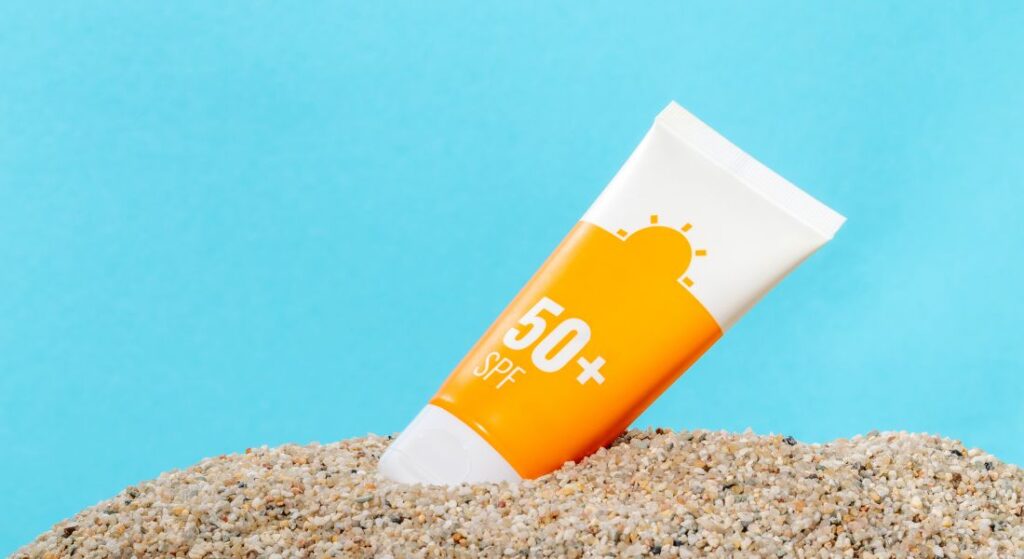
SPF primarily describes your sunscreen’s protection against erythema-producing ultraviolet radiation, which is mainly UVB. In formal testing, the SPF is calculated from the ratio between the UV dose needed to produce a defined level of redness on protected skin and the dose needed on unprotected skin.
A higher SPF therefore means greater tested protection against sunburn, but it should not be interpreted as permission to remain in strong sunlight for proportionally longer. Your actual protection also depends on applying enough product, covering exposed areas properly and reapplying it when needed.
Attention Shifted Towards UVA Protection
Early sunscreens concentrated mainly on preventing sunburn, which meant protection was heavily focused on UVB. As researchers learned more about UVA and its contribution to photoageing and other forms of skin damage, the limitations of UVB-focused protection became increasingly apparent. A 1969 description of UVA-related photoageing is often identified as an important milestone in this shift.
Later sunscreen development increasingly incorporated UVA filters and broad-spectrum testing. For you today, this means that an SPF number should not be considered on its own when choosing sun protection, because strong UVB protection does not automatically tell you the complete level of UVA protection.
UVA Rating Systems Improved Product Labels
The UVA star system used on many UK sunscreens was developed by Boots with Newcastle University in 1992. The system uses up to five stars to describe how balanced your sunscreen’s UVA protection is relative to its UVB protection rather than giving a completely independent absolute measure of UVA protection.
This is why you should look at the UVA information and SPF together. Current NHS guidance recommends at least SPF 30 with at least four-star UVA protection. You may also see UVA inside a circle; under the European standard this indicates that UVA protection reaches at least one third of the labelled SPF.
Mineral Sunscreens Also Evolved
Zinc oxide and titanium dioxide are inorganic UV filters that have become important ingredients in modern sunscreens. They attenuate ultraviolet radiation through absorption as well as scattering and reflection, rather than acting only as a physical shield sitting on top of your skin.
Older formulations containing larger particles could leave a conspicuous white film. Changes in particle size, coatings and formulation technology have allowed many modern products to spread more evenly and appear less opaque while retaining useful UV protection.
Sunscreen Became Part of Skin-Cancer Prevention
As evidence about ultraviolet exposure accumulated, sunscreen increasingly became part of public-health advice intended to reduce sunburn and cumulative UV damage rather than simply helping people tan more comfortably. Randomised evidence has also shown that regular sunscreen use can reduce some skin-cancer outcomes. In a major Australian trial, daily sunscreen use reduced the number of cutaneous squamous cell carcinomas, although the same trial did not show a significant reduction in basal cell carcinoma.
However, sunscreen does not eliminate your risk of skin cancer and should never be treated as permission to seek more UV exposure. Your strongest approach is to combine appropriate sunscreen with shade, protective clothing and sensible limits on time in strong sunlight.
Why Dermatologists Still Discuss Sun Protection

Choosing a sunscreen can feel confusing when you are faced with different SPF levels, UVA ratings and formulations, particularly if you have sensitive skin or a higher risk of sun damage. Understanding what each product offers can help you make a more informed choice about protecting your skin.
If you are consulting an experienced dermatologist in London for personalised skin and sun-protection advice, you can discuss an approach suited to your skin, medical history and individual concerns. Your dermatologist can help you understand which products and sun-protection measures may be appropriate for your specific needs.
Modern Sunscreen Is Only One Part of Protection
Today’s sunscreens are far more sophisticated than the early sun oils of the twentieth century, but you should still avoid relying on sunscreen alone. Using sunscreen alongside other protective measures can give your skin more comprehensive protection from ultraviolet exposure.
Current NHS advice recommends using at least SPF 30 with good UVA protection, while also seeking shade, wearing suitable clothing and reapplying sunscreen regularly. You should take particular care when ultraviolet levels are high, as limiting direct sun exposure remains an important part of protecting your skin.
Myth vs Fact
| Myth | What You Should Know |
| One scientist invented modern sunscreen. | Your modern sunscreen developed through contributions from many researchers, chemists and manufacturers over decades. |
| Franz Greiter invented the complete SPF system in one year. | Rudolf Schulze introduced an important protection-factor method in 1956, and Greiter later developed and popularised SPF terminology. |
| SPF tells you your total UVA and UVB protection. | Your SPF mainly communicates UVB/sunburn protection, so you should also check UVA protection. |
| SPF 50 means you can safely stay outside 50 times longer. | Your real protection depends on application, exposure and reapplication, and sunscreen should not be used to prolong sun exposure. |
| A five-star UVA rating automatically means very high overall protection. | Your UVA star rating is relative to UVB protection, so you should consider it together with an adequate SPF. |
| Mineral sunscreen is a recent invention. | Zinc oxide and titanium dioxide have a long history as inorganic UV filters, although modern formulations are more sophisticated. |
| Sunscreen alone prevents all UV damage. | You should combine sunscreen with shade and protective clothing because no sunscreen gives complete protection. |
Key Takeaways
- People protected their skin from strong sunlight long before modern sunscreen existed.
- The scientific history of sunscreen accelerated after ultraviolet radiation was identified in the nineteenth century.
- Experimental topical UV absorbers were being investigated before the twentieth century.
- Ambre Solaire was launched in 1935 and became an important commercial sunscreen milestone.
- Coppertone and Piz Buin emerged from developments during the 1940s.
- The SPF concept developed gradually rather than being invented in one universally agreed year.
- SPF primarily tells you about your sunscreen’s protection against sunburn-producing UV, mainly UVB.
- Your SPF number does not tell you the complete level of UVA protection.
- The UK’s UVA star system was introduced in 1992 and describes the balance between UVA and UVB protection.
- You should still combine sunscreen with shade and suitable clothing because no sunscreen provides complete UV protection.
UK Guidance Note
For current UK sun protection, you should choose a sunscreen with at least SPF 30 for UVB protection and at least four-star UVA protection. A UVA symbol inside a circle is another recognised indication of UVA protection. You should use enough product and reapply it liberally and frequently, especially after swimming, sweating or towel drying.
You should not use sunscreen as a reason to spend longer in strong sunlight. Shade, suitable clothing, a broad-brimmed hat and sunglasses remain important, and you should take particular care when the UV index is 3 or above.
Frequently Asked Questions
1. When was modern sunscreen first developed?
Your modern sunscreen developed gradually. Early human sun protection relied on clothing, shade and topical preparations, while synthetic UV-filtering formulations appeared during the early twentieth century and commercial sunscreen expanded during the 1930s and 1940s.
2. Who invented modern sunscreen?
There was no single inventor. Eugène Schueller, Benjamin Green, Franz Greiter, Rudolf Schulze and many other researchers contributed different products, testing methods and ideas that helped create your modern sunscreen.
3. When was Ambre Solaire introduced?
Ambre Solaire was introduced in 1935 as an early commercial filtered tanning oil associated with Eugène Schueller and L’Oréal. Its popularity grew alongside the expansion of recreational holidays during the 1930s.
4. Who developed SPF?
SPF developed in stages rather than through one isolated invention. Rudolf Schulze introduced an influential protection-factor method in 1956, and Franz Greiter later developed and popularised SPF terminology and its use.
5. What does your sunscreen’s SPF mean?
Your SPF describes protection against ultraviolet-induced sunburn under standardised conditions and is used primarily to communicate UVB protection. A higher SPF does not mean you should stay in direct sunlight for longer.
6. Does SPF tell you about UVA protection?
Not adequately by itself. In the UK, you should also look for at least four-star UVA protection or the UVA-circle symbol when choosing an SPF 30 or higher sunscreen.
7. When was the UK UVA star system introduced?
Boots states that it developed the UVA star-rating system in 1992. The system compares your sunscreen’s UVA protection with its UVB protection and now commonly runs up to five stars.
8. Are zinc oxide and titanium dioxide new sunscreen ingredients?
No. These inorganic UV filters have a long history in sun protection, although modern particle and formulation technology has improved the texture and appearance of many products.
9. Does sunscreen help protect you from skin cancer?
Sun protection helps reduce harmful ultraviolet exposure, which is a major cause of skin cancer. Your sunscreen should form part of a strategy that also includes avoiding sunburn, using shade and wearing protective clothing.
10. Is sunscreen enough to protect your skin?
No. You should not rely on sunscreen alone. Current UK guidance recommends combining at least SPF 30 with good UVA protection, shade, clothing and regular reapplication.
Final Thoughts: How Sunscreen Has Evolved
The history of sunscreen shows how scientific understanding has transformed simple sun protection into the sophisticated UVA and UVB protection available today. While modern formulations can make protecting your skin easier, sunscreen remains most effective when combined with shade, protective clothing and sensible sun exposure. If you’d like to book a consultation with one of our dermatologists in London, you can contact us at the London Dermatology Centre.
References:
- Salih, H., Psomadakis, C. and George, S.M.C. (2024) ‘Sunscreens: a narrative review’, Skin Health and Disease, 4(6), article e432. Available at: https://pmc.ncbi.nlm.nih.gov/articles/PMC11608887/
- Abdel Azim, S., Bainvoll, L., Vecerek, N., DeLeo, V.A. and Adler, B.L. (2025) ‘Sunscreens part 1: mechanisms and efficacy’, Journal of the American Academy of Dermatology, 92(4), pp. 677–686. Available at: https://www.sciencedirect.com/science/article/pii/S0190962224007850
- Drissi, M., Carr, E. and Housewright, C. (2022) ‘Sunscreen: a brief walk through history’, Baylor University Medical Center Proceedings, 35(1), pp. 121–123. Available at: https://pmc.ncbi.nlm.nih.gov/articles/PMC8682817/
- Urbach, F. (2001) ‘The historical aspects of sunscreens’, Journal of Photochemistry and Photobiology B: Biology, 64(2–3), pp. 99–104. Available at: https://pubmed.ncbi.nlm.nih.gov/11744395/
- Geoffrey, K., Mwangi, A.N. and Maru, S.M. (2019) ‘Sunscreen products: rationale for use, formulation development and regulatory considerations’, Saudi Pharmaceutical Journal, 27(7), pp. 1009–1018. Available at: https://www.sciencedirect.com/science/article/pii/S1319016419301033