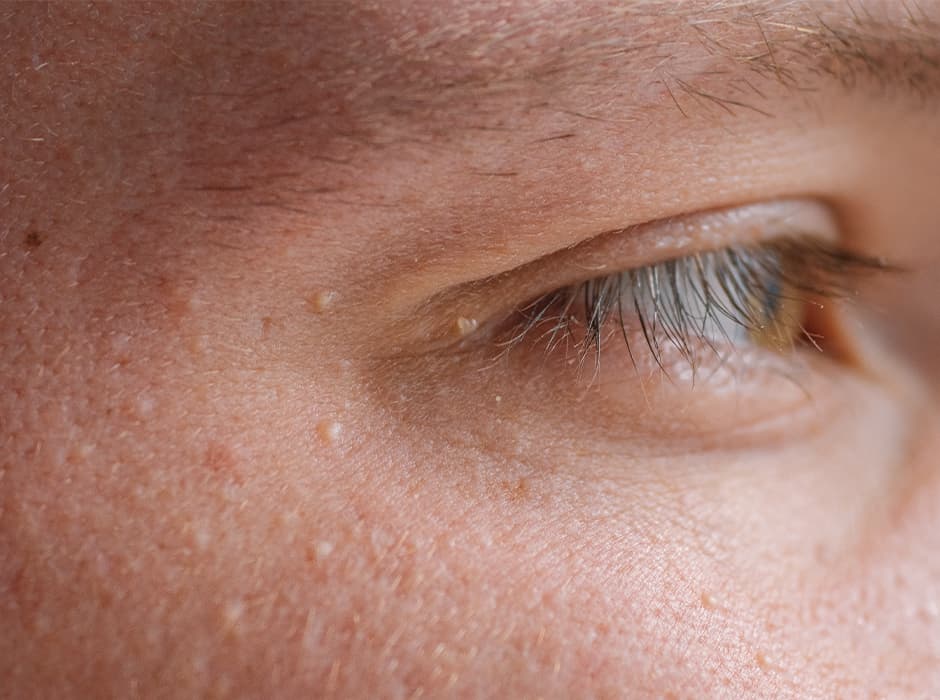

Milia Removal Treatment Clinic in London
Milia can affect anyone at any age, from newborns to adults. Common causes and contributing factors include:

In newborns, milia are very common and usually disappear without treatment. In adults, however, they tend to persist until removed by a professional.
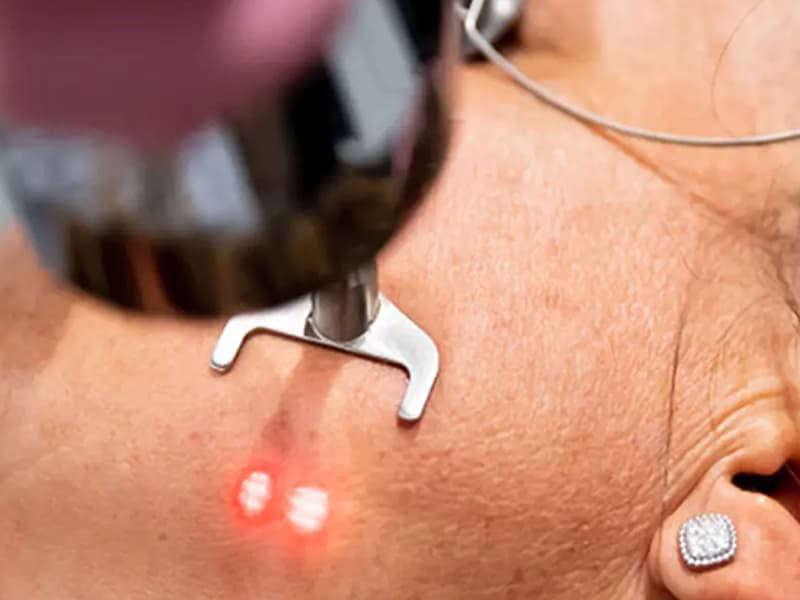
At the London Dermatology Centre, our dermatologists use precise methods to treat milia, including:
We never recommend squeezing or picking at milia at home, as this can lead to infection, scarring, or skin damage.

Milia removal is a quick, low-risk procedure, and recovery is generally straightforward. After treatment:
Most patients see an immediate improvement after removal, and the skin heals quickly, leaving little to no trace of the procedure.

Why Choose Professional Milia Removal?
Milia are small cysts filled with keratin, a natural protein that helps form the structure of your skin, hair, and nails. They develop when dead skin cells and keratin become trapped beneath the surface. This creates a firm, white or yellowish bump that does not have an opening like a spot or blackhead.
No, milia are not contagious and cannot be passed from one person to another. They form due to skin processes rather than infection. You can have multiple milia at once, but their presence does not indicate poor hygiene or illness.
In newborns, milia often resolve naturally within a few weeks as the skin matures. In adults, however, they usually remain until removed by a professional. Without treatment, they can persist for months or even years.
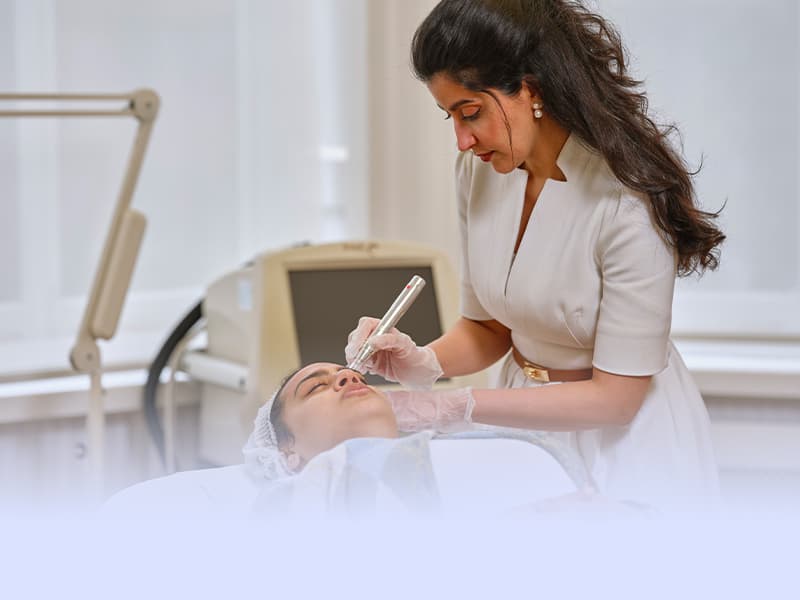
Milia removal is usually well tolerated and only involves minor discomfort. Your dermatologist may use a very fine needle or heat-based device to extract the cyst. For larger or multiple milia, a local anaesthetic may be applied to make the procedure more comfortable.
While not all cases can be prevented, gentle exfoliation and avoiding heavy, pore-clogging products can reduce the risk. Using daily sunscreen can also help, as sun damage can thicken the skin and trap keratin. Your dermatologist can suggest a tailored skincare routine to minimise recurrence.
It is possible for milia to return, especially if you have a skin type prone to them. However, following prevention advice from your dermatologist can significantly lower the likelihood. Addressing any underlying causes, such as sun damage or certain skincare habits, can also help.
Yes, when carried out by an experienced dermatologist using the correct technique, removal near the eyes is safe. Special care is taken in these delicate areas to protect your skin and vision. This is why professional treatment is always recommended over at-home attempts.
Most milia removal procedures take between 15 and 30 minutes, depending on how many are being treated. The process is quick, and you can return to normal activities straight afterwards. For very widespread milia, treatment may be done over more than one session.
When removed correctly by a dermatologist, the risk of scarring is extremely low. Any redness after treatment usually fades within a few days. Following aftercare advice will also help your skin heal smoothly.
Booking is simple — call us on 020 7467 3720 or use our contact form. Our reception team will find a convenient time for your consultation. During your appointment, your dermatologist will assess your skin and recommend the best treatment approach.
0207 467 3720
0207 467 3729
reception@the-dermatology-centre.co.uk
Monday - Friday: 9.00 AM - 5.30 PM
Saturday & Sunday: Closed
69 Wimpole Street,
London W1G 8AS.
To arrange your milia removal consultation, call us on 020 7467 3720 or use our contact form. Our team will be happy to book you in at a convenient time.


 Message Us