
Topical Medications: Special creams containing anti-cancer agents can be applied directly to the skin. These creams help to kill the cancer cells without the need for surgery. They are particularly useful for superficial skin cancers and pre-cancerous conditions.
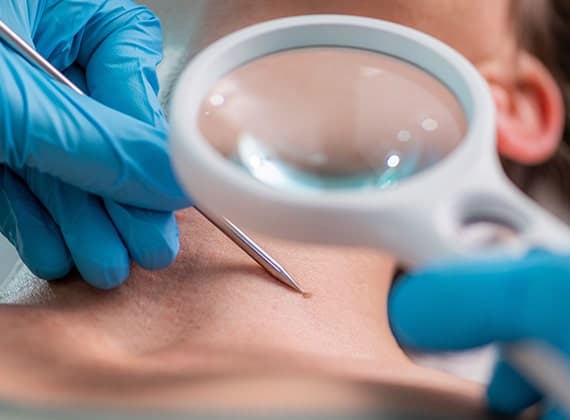
Curettage and Electrodesiccation: This procedure involves scraping away the cancerous tissue with a curette, a small spoon-shaped instrument. After scraping, the area is treated with an electric needle to destroy any remaining cancer cells. This method is often used for small, well-defined cancers.
Surgical Excision: The cancerous lesion is cut out along with a margin of healthy tissue surrounding it. This method is highly effective for most types of skin cancer and ensures complete removal of the tumour. The excised tissue is usually sent to a laboratory for further analysis.
Cryotherapy: In this treatment, liquid nitrogen is applied to the cancerous lesion to freeze and destroy the abnormal cells. This method is commonly used for pre-cancerous conditions and small, superficial skin cancers. The treated area will blister and shed the cancerous cells.
Photodynamic Therapy (PDT): PDT involves applying a photosensitizing agent to the skin, which is absorbed by the cancer cells. The area is then exposed to a specific wavelength of light, activating the agent and destroying the cancer cells. This method is effective for superficial skin cancers and certain pre-cancerous conditions.
Radiotherapy: In cases where surgery is not an option, radiotherapy can be used. High-energy radiation is targeted at the cancerous area to kill the cancer cells. This method is often used for skin cancers located in difficult-to-treat areas or for patients who are not good candidates for surgery.
Yes, we recommend booking promptly if you notice any changes in a mole or skin lesion. Early assessment can make a significant difference in outcomes.
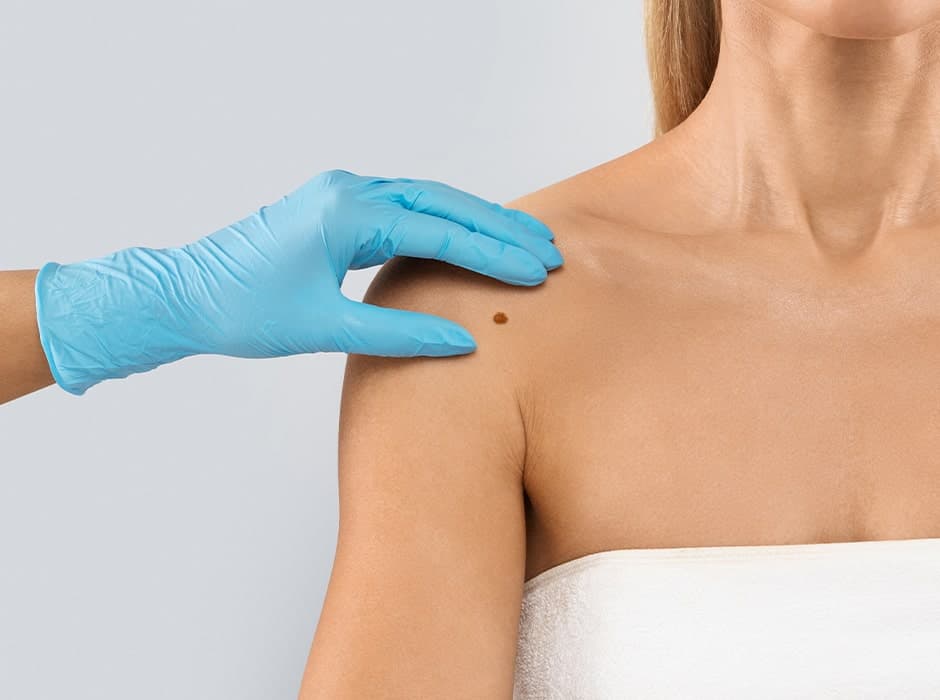
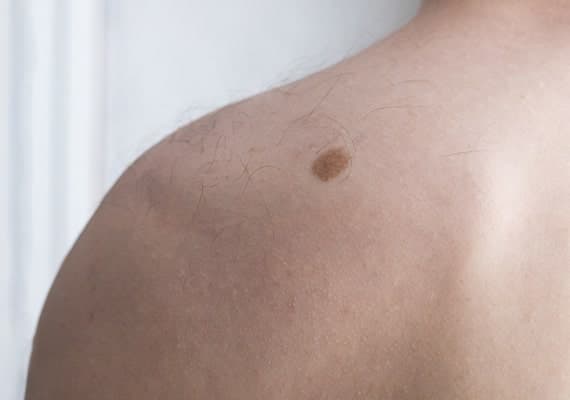
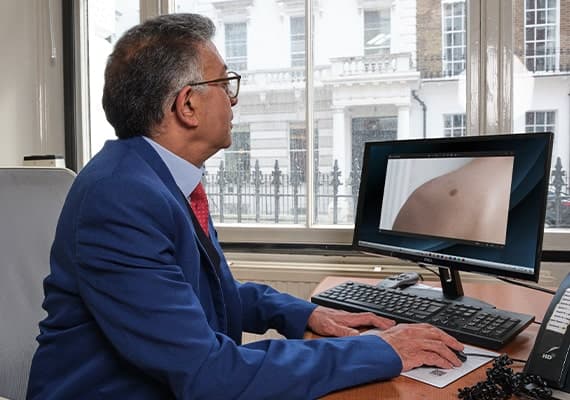
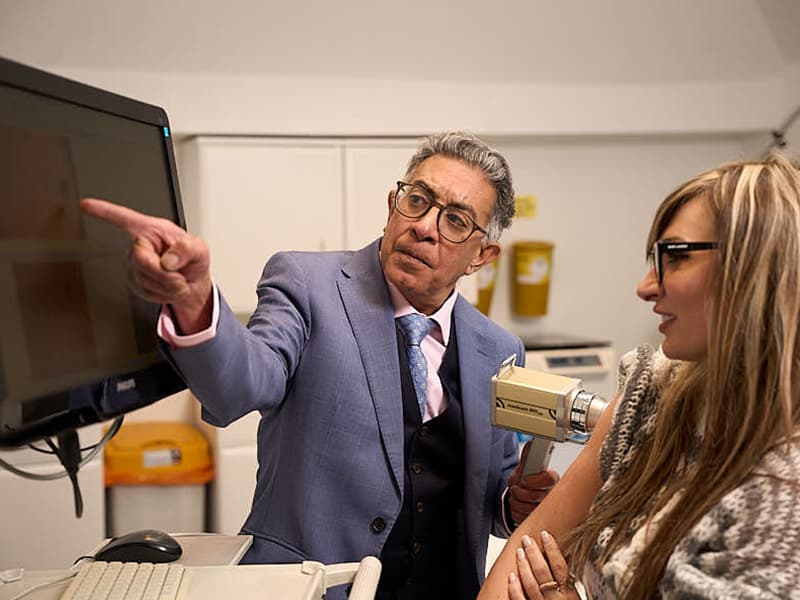
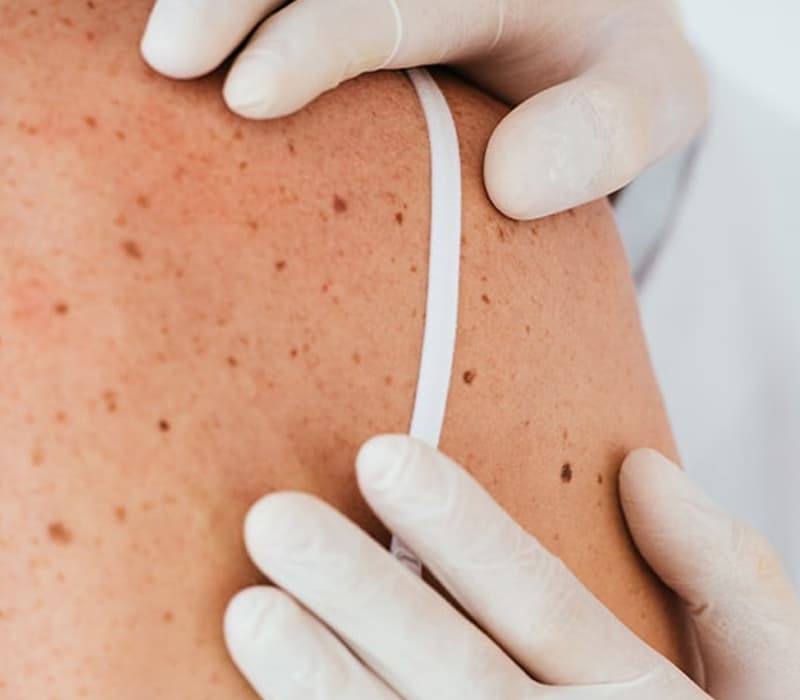
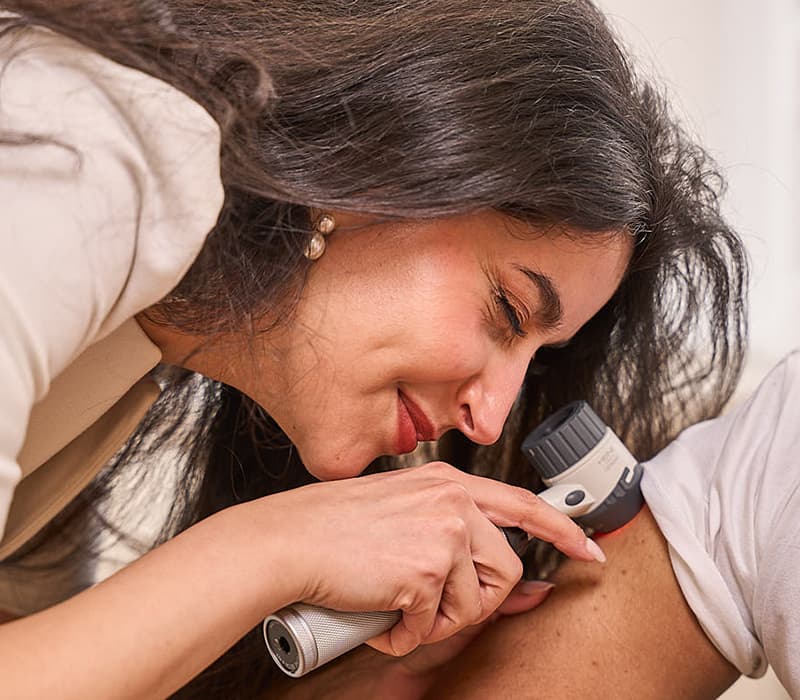
Your dermatologist will carry out a full skin examination and may use a dermatoscope to assess any suspicious areas. If needed, they may recommend a biopsy or mole mapping for further evaluation.
Yes, we can remove suspicious moles under local anaesthetic for diagnostic or treatment purposes. All removed tissue is sent for laboratory analysis to confirm the diagnosis.
Yes, we assess and diagnose all major types of skin cancer, including basal cell carcinoma, squamous cell carcinoma and melanoma. Our consultants have extensive experience in skin cancer detection and management.
Biopsy results are typically available within one to two weeks. Your dermatologist will contact you directly to explain the findings and discuss next steps if treatment is needed.
We offer a range of treatments including surgical excision, topical therapies, cryotherapy, and referral to oncology specialists where necessary. Your dermatologist will recommend the most appropriate plan for your diagnosis.
Yes, we offer priority appointments for patients with urgent concerns. Early diagnosis and peace of mind are our top priorities.
Yes, we provide regular follow-up checks to monitor your skin and reduce the risk of recurrence. Ongoing support and education are part of your long-term care plan.
0207 467 3720
0207 467 3729
reception@the-dermatology-centre.co.uk
Monday - Friday: 9.00 AM - 5.30 PM
Saturday & Sunday: Closed
69 Wimpole Street,
London W1G 8AS.
If you are concerned about skin cancer, get in touch with our private skin cancer clinic in London now. Our experienced consultant dermatologists can help diagnose and start prompt treatment as required.


 Message Us