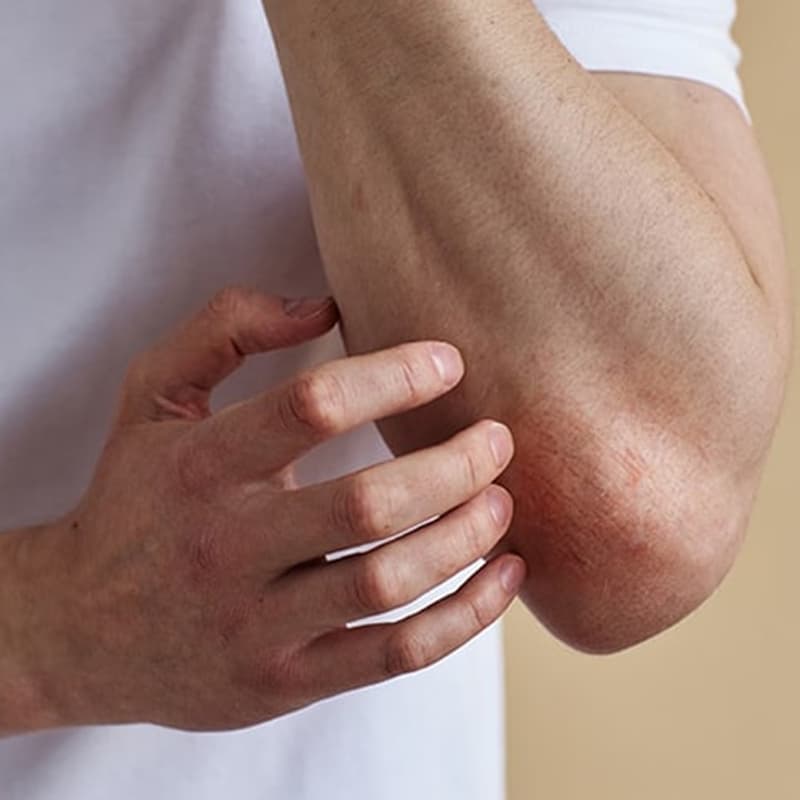

Psoriasis is an autoimmune condition that causes the skin cells to reproduce too rapidly, leading to red, inflamed patches. While there's no cure, various treatment options can effectively manage symptoms and improve quality of life. Below is a closer look at some common types of psoriasis. Remember, this is not an exhaustive list, and it's crucial to consult an expert dermatologist at our psoriasis clinic in London for proper diagnosis and a personalised treatment plan.
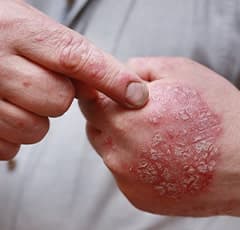
This is the most prevalent form, characterized by raised, red plaques covered with silvery-white scales. It generally affects the scalp, elbows, knees, and lower back, although it can manifest on any part of the body.
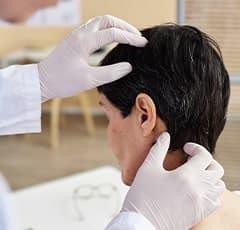
This can be quite itchy and uncomfortable. It manifests as thick, white or silvery scales on the scalp, sometimes extending to the forehead, ears, and neck.
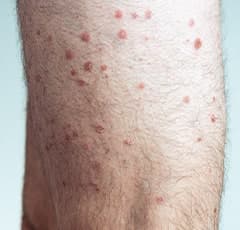
Often triggered by a bacterial infection, particularly strep throat, guttate psoriasis develops as small, teardrop-shaped red lesions on the torso, limbs, and scalp. It usually clears up within a few months but can recur.
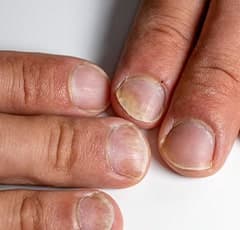
Psoriasis can also affect the nails, causing pitting, discoloration, thickening, and even separation from the nail bed. It often occurs alongside plaque psoriasis.
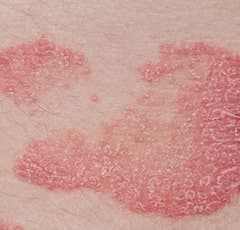
Unlike other types, this one affects smooth, hairless areas like the armpits, groin, and genitals. The patches are typically red, shiny, and less scaly compared to plaque psoriasis. Friction and moisture can worsen this form.

This less common type presents with white pustules (small, non-infectious blisters) on red, inflamed skin. It can be localized (affecting hands and feet) or generalised (covering larger areas).

The primary goal of psoriasis treatment is to stop the skin cells from building up so quickly on the skin's surface and to reduce scaliness. While there isn't a cure, psoriasis skin treatment can offer significant relief from symptoms, including itchiness, soreness, and flaking skin. Most types of psoriasis go through cycles where they flare up for a few weeks and then subside.
At our psoriasis treatment clinic in London, we offer three main types of psoriasis skin treatment: topical treatments, light therapy, and systemic medications.

Creams and topical ointments alone can effectively treat mild to moderate psoriasis. Treatments our skin doctors offer include:
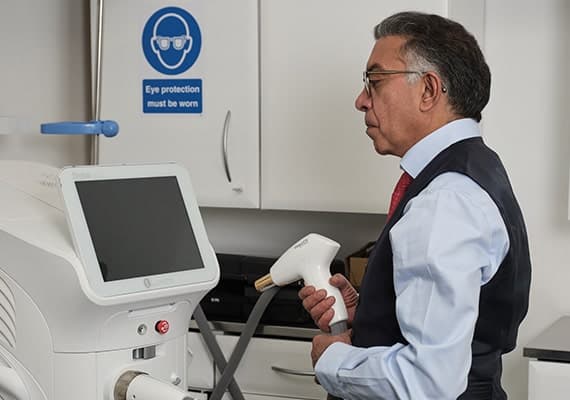
Psoriasis phototherapy employs natural or artificial ultraviolet light to alleviate symptoms and can be used alone or with medications. Light therapy options include:

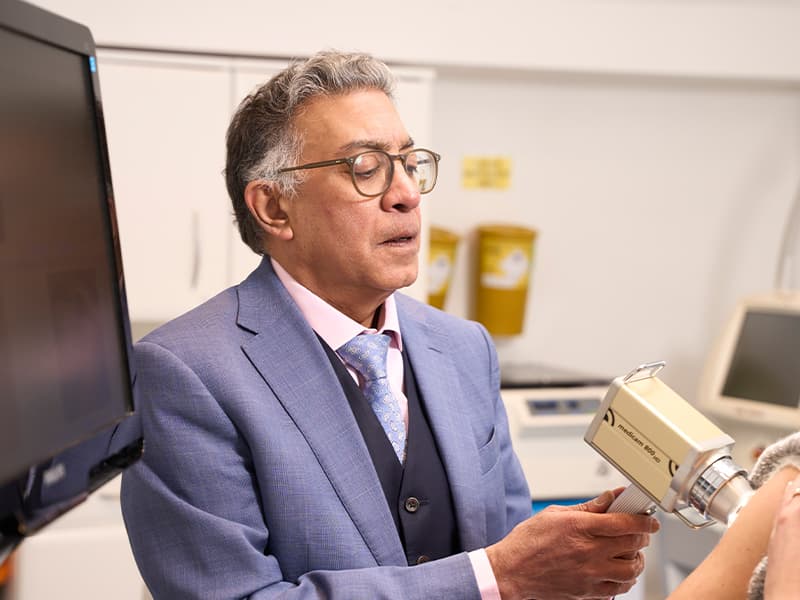
Each light therapy option has its own advantages and considerations, with the choice depending on the type and severity of psoriasis and individual patient needs. Consulting with a dermatologist at our psoriasis treatment clinic in London will help determine the most suitable light therapy for your condition.

Severe psoriasis, or cases that are resistant to other forms of treatment, may respond to oral or injected medications. They are usually used for only brief periods and alternated with other treatments. Your dermatologist may prescribe:
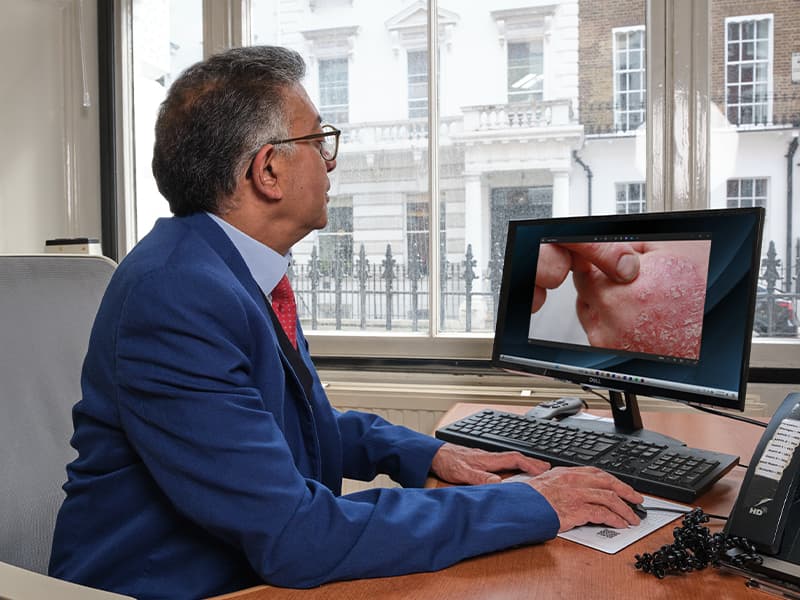
During your consultation at our psoriasis clinic in London, your dermatologist will discuss your symptoms and when they started. They will also try to identify any patterns, such as when the symptoms might be worse. It is best to come prepared, so you are ready to answer questions about when your symptoms began and exactly what they consist of, particularly if your symptoms are less noticeable when you book your appointment.
They will examine the affected area and diagnose the type of psoriasis you have or determine what is causing your skin to react. We are able to treat all types of psoriasis and skin conditions. After we have made a diagnosis, we may refer you for further testing, such as allergy patch testing, or prescribe medications, light therapy, topical creams, and home care instructions.
Our aim is to make your symptoms as minimal as possible with the most effective treatment plan for your condition.



At our psoriasis clinic in London, our specialist dermatologists will evaluate your skin condition and select the most appropriate treatment based on the type and severity of your psoriasis. Regardless of where the affected skin is located, our doctors will begin with the mildest treatments, escalating to stronger options if necessary. Our aim is to reduce cell turnover and associated skin irritations with minimal side effects.
Post-inflammatory hyperpigmentation or hypopigmentation can sometimes occur after treatment, and our dermatologists in London can assist you in managing these issues.
To discuss your psoriasis treatment options, call our team today on +44 (020) 7 467 3720.
No referral is necessary – you can book directly with one of our dermatologists. However, if you have a referral letter, you're welcome to bring it along to your appointment.
Our dermatologists treat all forms of psoriasis, including plaque, guttate, scalp, inverse and pustular psoriasis. We offer personalised treatment plans based on the type and severity of your condition.
In most cases, a suitable topical treatment will be recommended during your initial consultation. This is often the first step in managing mild to moderate psoriasis effectively.
Yes, we offer narrowband UVB phototherapy on-site as part of our treatment options. Your consultant will assess whether this is appropriate for your skin type and psoriasis severity.
Absolutely – our consultants regularly see patients with complex or treatment-resistant psoriasis. We'll take the time to review your history and explore advanced or combination therapies tailored to your needs.
Yes, we offer treatment for paediatric patients with psoriasis. Our dermatologists take a gentle and age-appropriate approach to ensure safe and effective care.
Yes, we have experience treating psoriasis in challenging areas like the scalp and nails. We use targeted treatments designed to reduce inflammation and restore appearance in these regions.
Response times vary depending on the type of treatment and severity of your psoriasis. Many patients begin to notice improvements within a few weeks of starting their personalised plan.
0207 467 3720
0207 467 3729
reception@the-dermatology-centre.co.uk
Monday - Friday: 9.00 AM - 5.30 PM
Saturday & Sunday: Closed
69 Wimpole Street,
London W1G 8AS.
For enquiries or to schedule a consultation at our psoriasis clinic in London, please fill out the contact form, and we will respond promptly. Our team of dedicated dermatologists is committed to providing you with the best care and treatment options for psoriasis. We are here to help you achieve optimal skin health.


 Message Us