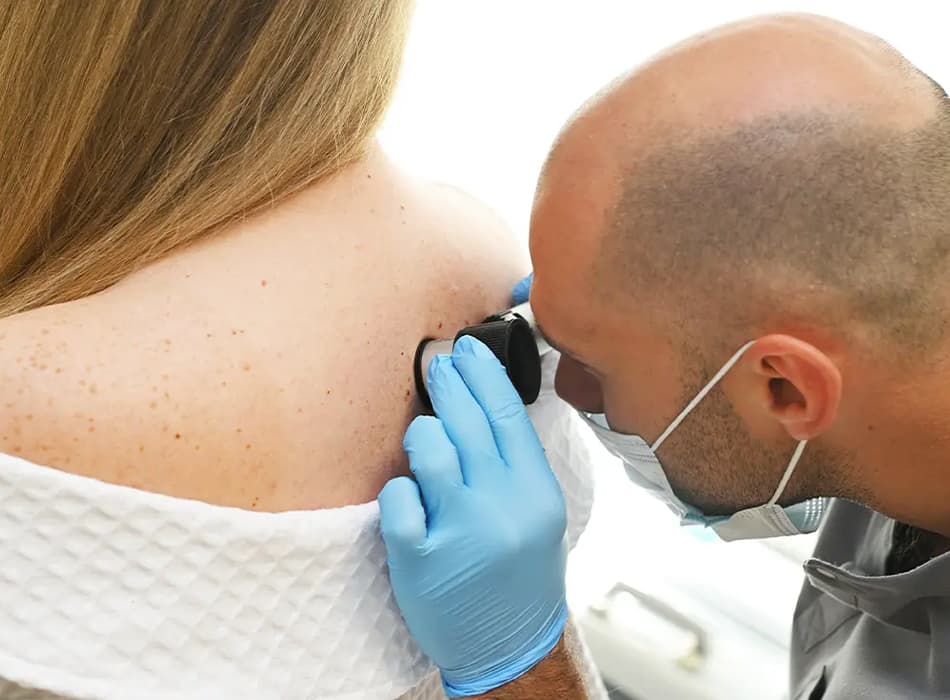
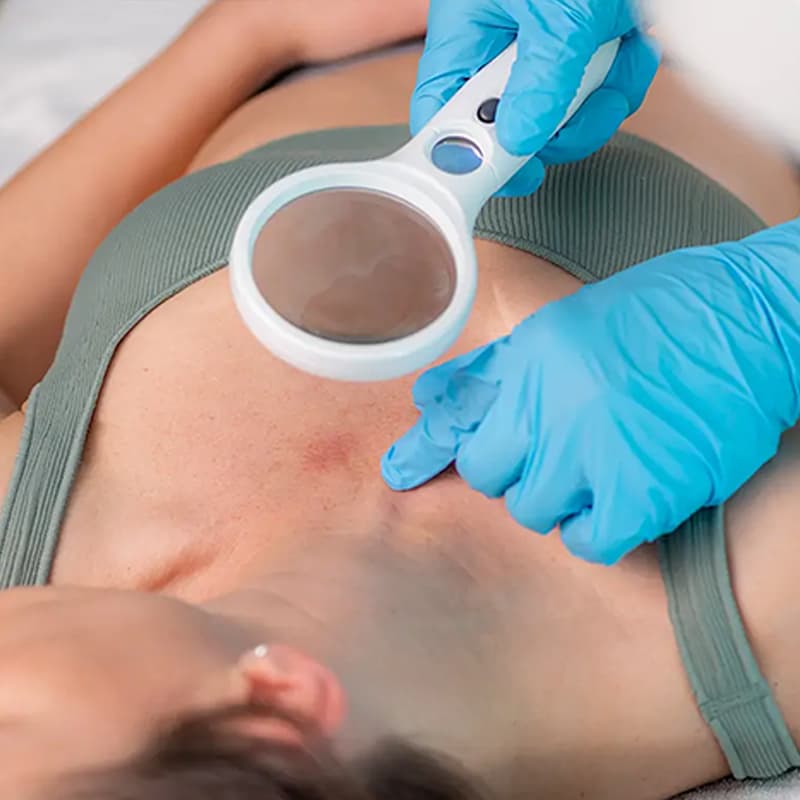

At the London Dermatology Centre, we take a thorough and evidence-based approach to diagnosing and managing SCC. We begin with a detailed skin examination and may take a biopsy to confirm the diagnosis. Once confirmed, we tailor your treatment plan based on the size, depth, location, and type of SCC.
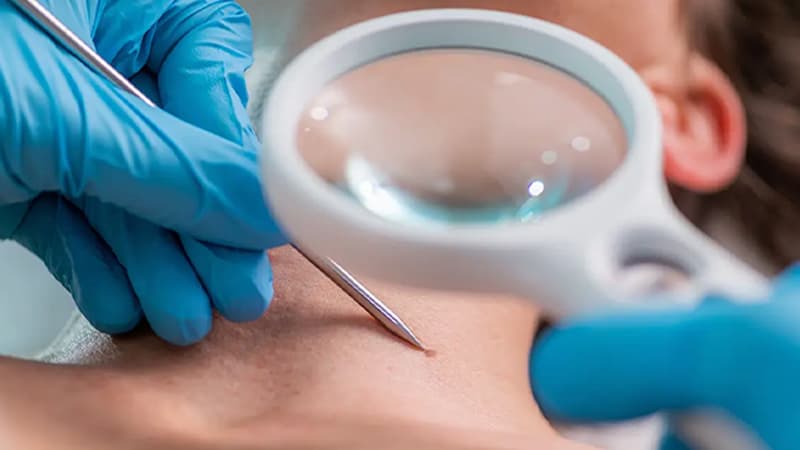
The most common and effective treatment for SCC involves surgically removing the tumour along with a clear margin of healthy tissue.
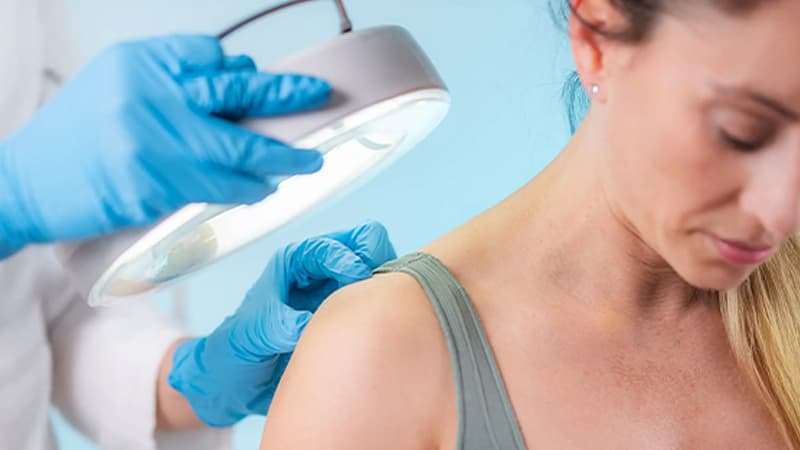
For high-risk SCCs (such as those on the face or ears), we may refer for Mohs surgery. This specialised technique removes cancer cells layer by layer under microscopic control, preserving as much healthy tissue as possible.
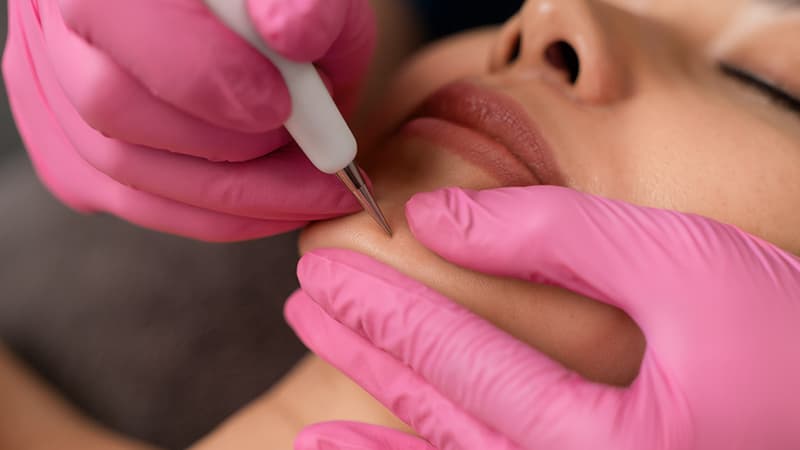
For small or superficial SCCs, we may perform curettage (scraping) followed by cauterisation to destroy residual cells.
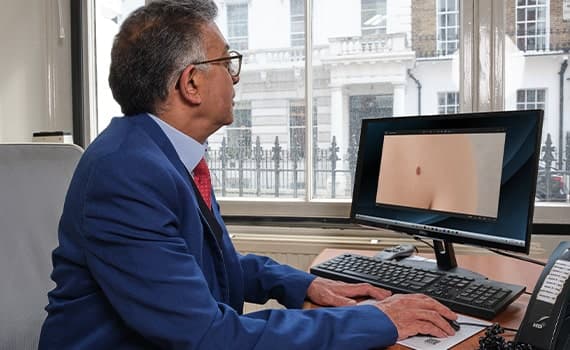
In certain cases—such as where surgery is not appropriate due to patient health or tumour location—radiotherapy may be considered. We work closely with oncology teams when this is recommended.

Our clinic is led by experienced consultant dermatologists who specialise in the diagnosis and treatment of skin cancer, including squamous cell carcinoma. We provide a personalised approach, combining clinical expertise with careful attention to both medical and cosmetic outcomes.
We understand that a skin cancer diagnosis can feel overwhelming. Our team is here to guide you through each step with clear information and compassionate support

Your Consultation
SCC is primarily caused by long-term exposure to ultraviolet (UV) radiation from the sun or tanning beds. It’s more likely to occur in people with fair skin, a history of sunburns, or weakened immune systems. Chronic skin injuries or inflammation can also increase the risk.
While most SCCs are treatable and don’t spread, some can become aggressive if left untreated—especially on the lips, ears, or scalp. In rare cases, SCC can spread to nearby lymph nodes or internal organs, so early treatment is important.
SCC may appear as a scaly patch, a crusted or raised growth, or a sore that doesn’t heal. It can also look like a wart or red, firm nodule. If a spot changes, bleeds, or doesn’t go away within a few weeks, it’s best to have it examined by a dermatologist.
Diagnosis is confirmed with a skin biopsy. This involves removing a small sample of the lesion under local anaesthetic and sending it to a laboratory for analysis. This helps confirm the type of skin cancer and guide treatment decisions.
Surgical excision is the most commonly used and effective treatment. For high-risk or facial lesions, Mohs micrographic surgery may be recommended. Smaller or superficial tumours might be treated with curettage or radiotherapy in selected cases.
If your SCC is removed surgically, you will likely need stitches. Your dermatologist will explain the procedure and provide full aftercare instructions to support healing and minimise scarring.
Yes, there is a risk of recurrence, particularly if margins were unclear or if the SCC was aggressive. That’s why follow-up skin checks are important, along with good sun protection habits to reduce future risk.
SCC most often appears on areas exposed to sunlight, like the face, scalp, and hands. However, it can also develop in areas with chronic inflammation, scarring, or on the genitals or inside the mouth. Regular skin checks help detect early changes.
You can reduce your risk by avoiding sunbeds, wearing daily sunscreen, covering up in the sun, and checking your skin regularly. Our team can also recommend skin-safe sunscreens and protective skincare tailored to your needs.
Call us on 020 7467 3720 or use our contact form to book a consultation. Our team will be happy to schedule your appointment and answer any questions.
0207 467 3720
0207 467 3729
reception@the-dermatology-centre.co.uk
Monday - Friday: 9.00 AM - 5.30 PM
Saturday & Sunday: Closed
69 Wimpole Street,
London W1G 8AS.
If you’ve been diagnosed with squamous cell carcinoma—or have a suspicious skin lesion—we’re here to help. Early treatment is key to reducing risk and preserving healthy skin.
Call us on 020 7467 3720 or use our contact form to arrange your consultation at the London Dermatology Centre.


 Message Us